
Introduction
Hiring a tile contractor can be a game-changer for anyone looking to upgrade their home spaces. Whether it’s a chic new bathroom or a sleek kitchen redo, a professional tile contractor ensures the job is done right, enhancing both the beauty and value of your home.
Quick Takeaways:
- Tile contractors specialize in installing tiles on floors, walls, and other surfaces.
- They provide essential services like tile-cutting, laying, and substrate preparation.
- Hiring professionals guarantees high-quality, durable installations.
Understanding what a tile contractor does and how they contribute to your project is crucial. From selecting the right materials to ensuring flawless installation, their expertise can turn your vision into reality.
Why It Matters:
Tiles are more than just a finishing touch. They add durability and style, transforming ordinary spaces into works of art. Proper tile installation extends the life of your surfaces and boosts property value, making it a worthwhile investment.
Stay with us as we navigate the fascinating world of tile contractors and uncover everything you need to know to hire the best.
Understanding Tile Contractor Services
Tile contractors offer a range of services to meet your tiling needs, from selecting the right materials to ensuring precise installation. Here’s a closer look at the types of tiles, installation techniques, and tools used by these professionals.
Types of Tiles
There are several types of tiles available, each with unique characteristics suitable for different applications:
-
Ceramic Tiles: Ideal for walls and floors, ceramic tiles are durable and water-resistant. They come in various colors and patterns, making them a versatile choice for any room.
-
Porcelain Tiles: Known for their density and low water absorption, porcelain tiles are perfect for high-moisture areas like bathrooms and kitchens. They can mimic the look of natural stone, wood, or even concrete.
-
Mosaic Tiles: These small tiles come in various materials, including glass, stone, and ceramic. They are often used for decorative accents, backsplashes, and intricate designs.
-
Marble Tiles: Luxurious and elegant, marble tiles are often used in high-end bathrooms and kitchens. They require more maintenance but add significant value and beauty to any space.
-
Travertine Tiles: A type of limestone, travertine tiles have a natural, rustic look. They are commonly used for floors, walls, and outdoor spaces like patios.
Installation Techniques
Tile contractors employ various techniques to ensure a flawless installation:
-
Surface Preparation: Proper preparation is crucial. This includes cleaning and leveling the surface, removing old tiles, and applying an underlayment if necessary.
-
Layout Planning: Contractors carefully plan the tile layout to ensure even spacing and alignment. This step often includes creating a reference line to guide the installation.
-
Cutting Tiles: Precision cutting is essential for fitting tiles around edges and corners. Contractors use tools like tile cutters and wet saws to achieve clean cuts.
-
Applying Adhesive: The adhesive, or thinset mortar, is spread evenly on the surface using a notched trowel. This ensures strong adhesion and prevents tiles from shifting.
-
Grouting: After the tiles are set, grout is applied to fill the gaps between tiles. This step not only secures the tiles but also prevents moisture from seeping underneath.
-
Sealing: Some tiles, like natural stone, require sealing to protect against stains and moisture. This step is crucial for maintaining the tile’s appearance and longevity.
Tools Used
Tile contractors rely on a variety of specialized tools to achieve professional results:
-
Tile Cutters: These tools are used for making straight cuts in ceramic and porcelain tiles. They come in manual and electric versions.
-
Wet Saws: Ideal for cutting thicker and harder materials like stone and porcelain, wet saws use a diamond blade cooled by water to prevent overheating.
-
Notched Trowels: These are used to spread adhesive evenly. The size of the notches varies depending on the type of tile and the surface.
-
Grout Floats: These rubber tools are used to spread grout into the joints between tiles, ensuring a smooth and even finish.
-
Tile Spacers: Small plastic pieces that help maintain consistent spacing between tiles during installation.
-
Leveling Systems: These systems ensure that tiles are laid flat and level, preventing lippage (uneven tile edges).
By understanding the types of tiles, installation techniques, and tools used, you can better appreciate the expertise and precision required in tile installation. This knowledge will also help you communicate more effectively with your tile contractor and ensure that your project meets your expectations.
Stay tuned as we explore how to choose the right tile contractor for your project.
How to Choose the Right Tile Contractor
Choosing the right tile contractor can make or break your project. Here are key factors to consider:
Experience
Experience is crucial. An experienced contractor knows how to handle different tiles, substrates, and installation challenges. According to Forbes, a contractor with at least two years of full-time experience is often more reliable.
Example: A homeowner in Charlotte hired a contractor with 15 years of experience. The contractor identified and fixed a hidden moisture problem before it damaged the new tiles, saving the homeowner thousands.
Licensing
Always check if your tile contractor is licensed. Licensing shows that the contractor meets local regulations and standards. This gives you peace of mind and legal protection.
Fact: Charlotte Tile Installers emphasize their licensed status, which reassures customers of their credibility and professionalism.
Reviews and References
Look for reviews and ask for references. Websites like Angi and Yelp can provide insights from past clients. Positive reviews and references indicate a contractor’s reliability and quality of work.
Quote: “A reputable contractor won’t hesitate to share references,” says Aqua Gleam Bathrooms.
Price Range
Understand the cost structure. The average cost of installing tile ranges between $5 and $45 per square foot, depending on the type of tile and project complexity. Get multiple quotes to compare prices and services.
Table:
| Tile Type | Material Cost per Sq Ft | Installation Cost per Sq Ft | Total Cost per Sq Ft |
|---|---|---|---|
| Porcelain | $3 – $40 | $6 – $13 | $9 – $53 |
| Glazed | $2 – $15 | $5 – $12 | $7 – $27 |
| Hexagonal Tiles | $8 – $20 | $8 – $20 | $16 – $40 |
By considering these factors—experience, licensing, reviews, and price range—you can make an informed decision and choose a tile contractor who will deliver high-quality results.
Next, we’ll dive into the costs associated with hiring a tile contractor.
Costs Associated with Hiring a Tile Contractor
When hiring a tile contractor, understanding the costs involved is crucial. This section breaks down the main expenses: labor costs, materials, and additional fees.
Labor Costs
Labor is often the most significant part of the cost. On average, tile contractors charge around $85 per hour. However, this rate can vary based on factors like the complexity of the project and the contractor’s experience.
For example, installing tiles in a straightforward area like a hallway will typically cost less than a bathroom with lots of fixtures to work around. According to Forbes, most contractors also have a minimum fee that covers one and a half to two hours of work.
Materials
The cost of materials depends on the type of tile you choose. Prices can range from $7 to $15 per square foot, including both the tile and the adhesive. High-end materials like marble or custom designs can push this cost higher.
- Ceramic Tiles: Affordable and durable, costing around $7-$10 per square foot.
- Porcelain Tiles: Slightly more expensive, ranging from $10-$15 per square foot.
- Natural Stone: Can go up to $50 per square foot for luxurious options like marble.
Additional Fees
There are often hidden costs that can add up quickly. These may include:
- Subfloor Preparation: If the subfloor is damaged or uneven, it needs to be repaired or replaced. This can add significant costs.
- Old Tile Removal: Removing existing tiles is labor-intensive and can cost extra.
- Complex Designs: Intricate patterns or custom layouts often require more time and skill, increasing labor costs.
- Travel Fees: Some contractors charge extra if the job site is far from their base of operations.
Summary
Understanding these costs will help you budget more effectively for your tile installation project. Always ask for a detailed quote that breaks down labor, materials, and any additional fees. This transparency ensures there are no surprises down the line.
Next, we’ll walk you through a step-by-step guide to hiring the right tile contractor.
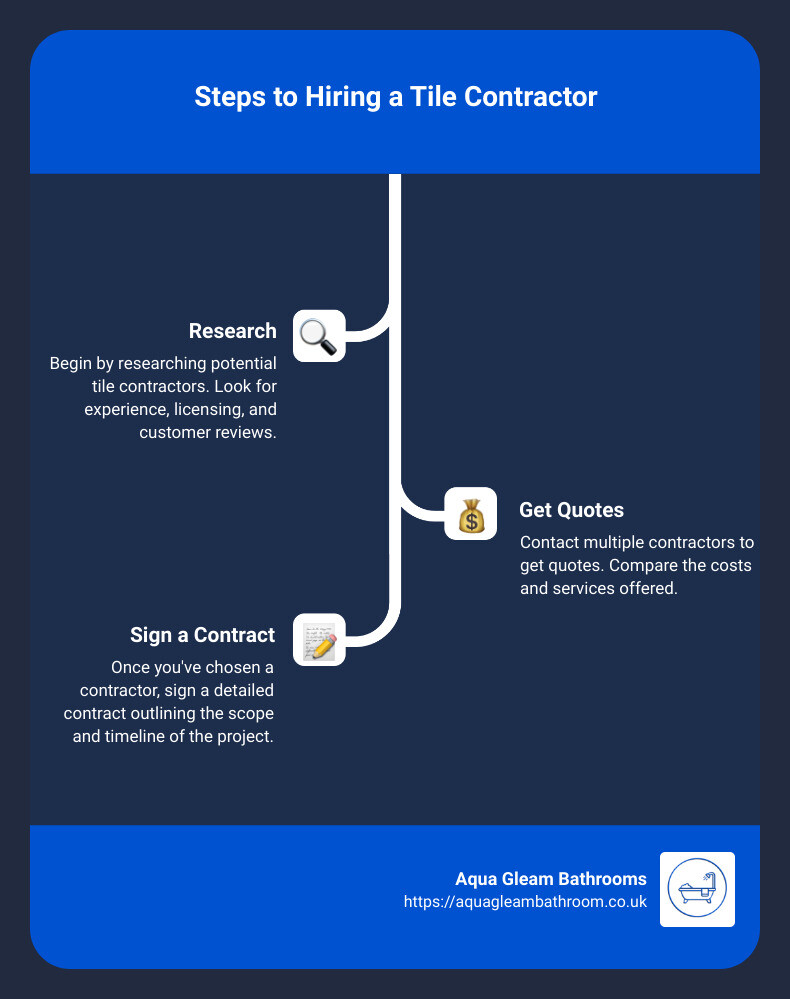
Step-by-Step Guide to Hiring a Tile Contractor
Research
The first step in hiring a tile contractor is doing your homework. Start by asking for recommendations from friends, family, or neighbors who have had tile work done recently. Online platforms like Angi and Yelp also provide reviews and ratings for local contractors.
Pro Tip: Look for contractors with a Certified Tile Installer (CTI) certification. This ensures they have proven expertise in tile installation.
Quotes
Once you have a list of potential contractors, it’s time to get quotes. Contact at least three contractors to get a sense of the price range for your project. Make sure each quote includes:
- Labor costs
- Material costs
- Additional fees (e.g., travel fees, site preparation)
Example: Charlotte Tile Installers, a reputable company in North Carolina, offers detailed quotes that break down all these costs, ensuring transparency.
Contracts
After comparing quotes, choose the contractor that best fits your needs and budget. Before any work begins, sign a contract. This document should outline:
- Scope of work: Detailed description of the project, including materials to be used.
- Timeline: Start and completion dates.
- Payment terms: Schedule for payments, including any deposits required.
- Warranty: Any guarantees on the work performed.
Case Study: Aqua Gleam Bathrooms provides a comprehensive contract that covers all these aspects, ensuring both parties are on the same page.
Project Management
Effective project management is crucial for a smooth tile installation process. Here are some tips:
- Communication: Establish a clear line of communication with your contractor. Regular updates can help address any issues promptly.
- Access: Ensure the contractor has easy access to the work area. Clear the space of any obstacles.
- Inspection: Periodically inspect the work to ensure it meets your standards. Don’t hesitate to ask questions or request adjustments.
Quote: “A well-managed project is a successful project,” says a contractor from Charlotte Tile Installers. Regular check-ins can make all the difference.
By following these steps, you can ensure a smooth and successful tile installation project. Up next, we’ll answer some frequently asked questions about tile contractors.
Frequently Asked Questions about Tile Contractors
How much should labor cost for tile installation?
The cost of labor for tile installation can vary based on several factors, including the type of tile, the complexity of the design, and the region. On average, you can expect to pay between $7 to $15 per square foot for professional installation. This price generally includes both materials and labor. Custom projects, such as intricate mosaics or large patios, may cost more, ranging from $5 to $50 per square foot.
Fact: According to a review on Yelp, a customer in Charlotte praised a contractor for their detailed work on a kitchen backsplash, highlighting the value of professional craftsmanship.
What is a tile professional called?
A tile professional is commonly referred to as a tile contractor or tile installer. These professionals are skilled in selecting, cutting, and installing tiles to create durable and aesthetically pleasing surfaces. They may specialize in different types of tiles, such as ceramic, porcelain, or marble, and often have expertise in various installation techniques.
Quote: “Exceptional teams make extraordinary installations,” says Charlotte Tile Installers, emphasizing the importance of skilled professionals in achieving high-quality results.
How do you estimate a tile job?
Estimating a tile job involves several steps to ensure accuracy and transparency. Here’s a simplified process:
- Measure the Area: Calculate the total square footage by measuring the length and width of the space to be tiled.
- Choose Materials: Select the type of tile and any additional materials like grout or sealant. Prices can vary significantly based on quality and design.
- Calculate Labor Costs: Based on the average cost per square foot, estimate the labor charges. Complex designs or larger areas may increase this cost.
- Add Additional Fees: Include any extra costs such as demolition of old tiles, preparation of the surface, or special cutting requirements.
Tip: Always ask for a detailed written estimate. This should include a breakdown of material costs, labor charges, and any additional fees. For example, Aqua Gleam Bathrooms recommends getting multiple quotes to compare prices and services.
By understanding these key aspects, you can better navigate tile contractors and make informed decisions for your next project. Up next, we’ll explore the benefits of professional tile installation.
Benefits of Professional Tile Installation
Durability
One of the biggest benefits of hiring a professional tile contractor is the durability of the installation. Tiles, when installed correctly, can last for decades. For instance, porcelain tile can last up to 75 years or more with proper care. Even ceramic tiles, which are slightly less durable, can last for 60 years or more if installed by a skilled professional.
Professional installation ensures that tiles are properly adhered to the surface, reducing the likelihood of cracking or loosening over time. This longevity means less frequent replacements and repairs, saving you money in the long run.
Aesthetics
A professional tile installation not only lasts longer but also looks better. Professionals have the skills and tools to cut tiles precisely, ensuring a neat and uniform appearance. They also know how to handle complex patterns and designs, which can significantly enhance the overall look of your space.
For example, a well-executed tile pattern can transform a dull kitchen into a stylish cooking area or turn a basic bathroom into a spa-like retreat. The attention to detail that professionals bring can make a huge difference in the final result.
Property Value
Professional tile installation can also boost your property’s value. According to Angi, tile is a highly durable and attractive building material that savvy buyers recognize as low-maintenance and long-lasting. Installing high-quality tiles in key areas like kitchens and bathrooms can make your home more appealing to potential buyers.
Moreover, the return on investment (ROI) is generally higher when a professional does the work. Mistakes in DIY tile installation can be very evident and detract from the appearance and value of your home. A professional job, on the other hand, adds a touch of quality and craftsmanship that can significantly increase your home’s market value.

By opting for professional tile installation, you’re not just paying for the tiles and labor; you’re investing in the durability, aesthetics, and value of your home. Up next, we’ll dive into some frequently asked questions about hiring a tile contractor.
Conclusion
At Aqua Gleam Bathrooms, we understand that tile installation is more than just a home improvement project; it’s about enhancing the beauty and value of your space. Our team of expert tile contractors is dedicated to delivering high-quality work and ensuring your satisfaction from start to finish.
Customer Satisfaction
Customer satisfaction is at the heart of everything we do. We believe that a happy customer is not only likely to use our services again but also to recommend us to friends and family. We guide you through every step of the process, from the initial consultation to the final inspection, ensuring that you are informed and comfortable with each decision. Our 2-year workmanship guarantee* further ensures that if there’s a problem with our installation, our team will promptly rectify it.

Future Maintenance Tips
To keep your newly installed tiles looking their best, regular maintenance is essential. Here are some tips to help you maintain the longevity and beauty of your tiles:
-
Regular Cleaning: Use a mild detergent and a soft cloth or mop to clean your tiles regularly. Avoid harsh chemicals that can damage the tile surface.
-
Grout Care: Grout can become discolored over time. Clean it with a mixture of baking soda and water, and consider sealing it annually to prevent stains and moisture buildup.
-
Preventive Measures: Use mats or rugs in high-traffic areas to minimize wear and tear. Place felt pads under furniture legs to prevent scratches.
-
Inspection: Periodically inspect your tiles and grout for any signs of damage or wear. Addressing small issues early can prevent them from becoming larger, more costly problems.
By following these tips, you can ensure that your tiles remain in excellent condition for years to come.
For more information on our services, check out our professional tiling services. We are here to help you every step of the way, turning your dream space into a reality.
Thank you for choosing Aqua Gleam Bathrooms. We look forward to serving you and making your home more beautiful, one tile at a time.