

Introduction
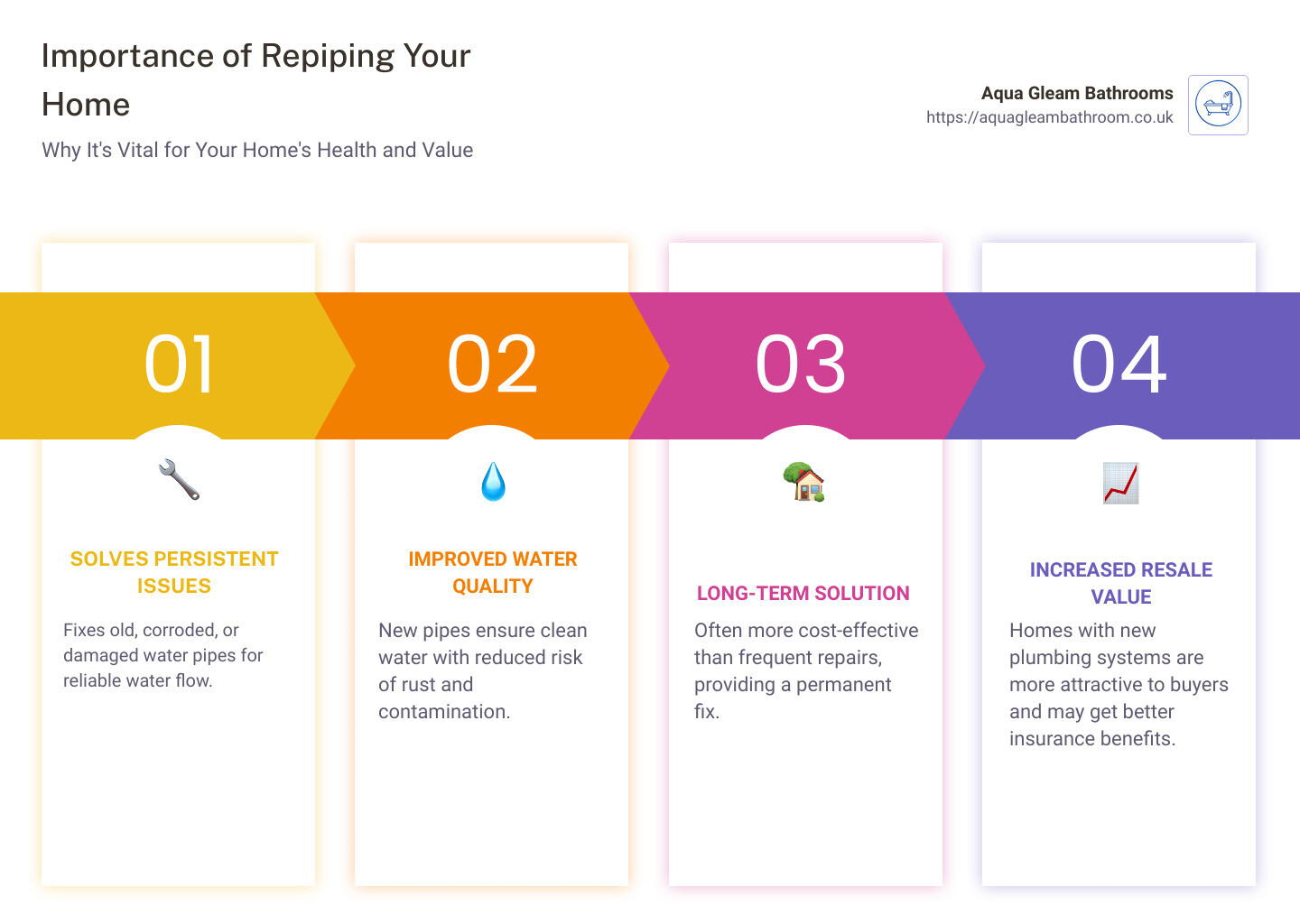
Re-pipe specialists play a crucial role in maintaining the health and value of your home. If you’re dealing with persistent plumbing issues, rusty water, or low water pressure, it might be time to consider repiping your home. Here’s why it’s important and how it can impact your home’s value:
- Importance of Repiping:
- Solves Persistent Plumbing Issues: Repiping fixes old, corroded, or damaged water pipes, leading to more reliable water flow.
- Improved Water Quality: New pipes ensure clean water with reduced risk of rust and contamination.
-
Long-Term Solution: Repiping is often more cost-effective than frequent repairs, providing a permanent fix.
-
Home Value Impact:
- Increased Resale Value: Homes with new plumbing systems are more attractive to buyers.
- Insurance Benefits: Some insurance companies offer lower premiums for homes with updated plumbing, reducing long-term costs.
Understanding the importance of repiping and its impact on home value can save you from future headaches and increase your home’s market value.
Understanding Repipe Services
When it comes to repiping your home, knowing what to expect can make the process smoother. Here’s what you need to know about the types of pipes, common issues, and the lifespan of plumbing.
Types of Pipes
There are several materials used in home plumbing systems, each with its own pros and cons:
-
Copper Pipes: Known for their durability and resistance to bacteria, copper pipes can last up to 70-80 years. However, they can be prone to corrosion, especially in areas with hard water.
-
PEX (Cross-linked Polyethylene) Pipes: These are flexible, easy to install, and resistant to scale and chlorine. PEX pipes can last up to 50 years. They are less likely to burst in freezing conditions compared to copper.
-
PVC (Polyvinyl Chloride) Pipes: Commonly used for waste lines, PVC pipes are durable and resistant to corrosion. They can last up to 100 years but are not suitable for hot water lines.
Common Issues
Understanding common plumbing issues can help you decide if repiping is necessary:
-
Corrosion and Rust: Older pipes, especially those made of galvanized steel or copper, can corrode over time. This leads to leaks, discolored water, and reduced water pressure.
-
Leaks: Frequent leaks are a sign that your pipes are deteriorating. Temporary fixes can add up in cost and stress.
-
Water Pressure Problems: Low or inconsistent water pressure can indicate blockages or corrosion inside the pipes.
-
Polybutylene Pipes: These were commonly used from the late 1970s to mid-1990s. They are prone to breaking and leaking, and their failure rate is high. Many insurance companies refuse to cover homes with polybutylene pipes.
Lifespan of Plumbing
The lifespan of your plumbing system depends on the type of pipes used:
| Pipe Material | Average Lifespan |
|---|---|
| Copper | 70-80 years |
| PEX | 50 years |
| PVC | 100 years |
| Galvanized Steel | 20-50 years |
| Polybutylene | 10-15 years |
Knowing the lifespan of your pipes can help you plan for future repairs or replacements. For example, if your home has galvanized steel pipes that are over 40 years old, it might be time to consider repiping.
By understanding the types of pipes, common issues, and the lifespan of plumbing, you can make informed decisions about your home’s plumbing needs.
Choosing the Right Re-pipe Specialist
Selecting the right re-pipe specialist is crucial for a successful repiping project. Here are some key factors to consider:
Certifications
Certifications ensure that the specialist has the necessary training and skills. Look for:
- Licensure: A licensed plumber meets state requirements and follows industry standards. This protects you from potential mishaps.
- Insurance: Confirm that the specialist has liability insurance. This covers any damages or injuries that might occur during the job.
- Specialized Training: Some specialists have additional certifications in specific repiping methods, like PEX piping or copper repiping. This expertise can be beneficial.
Experience
Experience matters. A seasoned specialist is likely to handle unexpected issues more effectively. Consider:
- Years in Business: Companies like Aqua Gleam Bathrooms have been providing turnkey repiping solutions for many years. Their longevity speaks to their reliability.
- Project Scope: Ensure the specialist has experience with projects similar to yours. For instance, if you have a 100-year-old home, choose someone who has worked with older plumbing systems.
- Customer Testimonials: Positive reviews and testimonials can provide insights into a specialist’s quality of work.
Local Reputation
A good local reputation is a strong indicator of a reliable re-pipe specialist. Here’s how to gauge it:
- Online Reviews: Platforms like Yelp can offer valuable feedback from previous clients. Specialists with high ratings and positive comments are often a safe bet.
- Word of Mouth: Ask neighbors or local friends for recommendations. Personal experiences can be very telling.
- Local Knowledge: Specialists familiar with your area’s plumbing issues are better equipped to handle specific challenges. For example, they might know that certain older homes in Central Valley, CA, often require more extensive repiping due to outdated materials.
By focusing on certifications, experience, and local reputation, you can choose a re-pipe specialist who will deliver high-quality, reliable service.
Cost Considerations for Repiping Your Home
When considering repiping your home, understanding the costs involved is crucial. Let’s break down the key factors: average costs, financing options, and cost-saving tips.
Average Costs
Repiping a home is a significant investment. The cost can vary widely depending on the size of your home, the type of pipes used, and the complexity of the job.
- Small homes: Approximately $1,500 to $4,000.
- Medium-sized homes: Typically range from $4,000 to $10,000.
- Larger homes: Costs can exceed $15,000.
For example, one homeowner in Denver reported a cost of $3,300 for repiping, which included drywall repairs. Always get a detailed estimate from your re-pipe specialist to avoid unexpected expenses.
Financing Options
Repiping can be costly, but many companies offer financing options to make it more affordable.
- Special Financing: Some specialists provide no-interest financing for up to 12 months if paid in full.
- Flexible Payment Plans: Opt for plans that allow you to spread the cost over several months or years.
- Home Equity Loans: Using your home as collateral can offer lower interest rates.
Check with your re-pipe specialist to see what financing options they offer. This can significantly ease the financial burden.
Cost-Saving Tips
Repiping doesn’t have to break the bank. Here are some tips to help you save money:
- Do Some Work Yourself: Simple tasks like demolition can save you labor costs. One homeowner saved around £700 by handling the demolition themselves.
- Choose Affordable Materials: Opt for budget-friendly yet reliable materials. For instance, larger tiles can save money while still looking great.
- Plan and Budget Efficiently: Set aside a contingency fund for unexpected costs. A good rule of thumb is to add an extra 20% to your budget for unforeseen expenses.
- Get Multiple Quotes: Always get at least three quotes from different specialists. This ensures you get the best value for your money.
By understanding the costs, exploring financing options, and following cost-saving tips, you can make your repiping project more affordable and manageable.
Signs You Need a Repipe Specialist
Identifying the need for a re-pipe specialist can save you from costly repairs and potential water damage. Here are some clear signs that indicate it’s time to call in the experts:
Water Discoloration
If you notice brown, yellow, or rust-colored water coming from your taps, this is a major red flag. Discolored water often indicates corrosion or rust inside your pipes. Over time, this can lead to leaks or even pipe bursts, causing significant damage to your home.
“Galvanized pipe was manufactured and installed between 1880 and 1960, and is made of a steel tubing dipped in a coat of zinc. Iron oxide (rust) develops on the inner walls of the pipe, and contaminates the water it channels,” notes a .
Leaks
Persistent or multiple leaks are another sign you need a repipe. While a single leak might just require a minor repair, frequent leaks often indicate systemic issues. Corroded or damaged pipes are prone to repeated failures, making a whole-house repipe a more cost-effective and permanent solution.
“While repaired pipes are prone to failing repeatedly, potentially necessitating more repair calls in the future, home repiping is effectively permanent,” says Flow Rite Plumbing.
Water Pressure Issues
Low or uneven water pressure can be frustrating and is often a sign of underlying pipe problems. Corrosion, mineral build-up, or leaks within the pipes can all contribute to diminished water flow. If you experience a sudden drop in water pressure, have your pipes inspected by a professional.
“Corrosion in copper pipes can cause low and uneven water pressure, discolored water, and bad tasting water; and can result in small pinhole leaks or even sudden bursts,” according to Replumb Specialties.
Recognizing these signs early can help you avoid more severe plumbing issues and maintain the integrity of your home’s water system. If you experience any of these problems, it’s time to consult a re-pipe specialist.
Frequently Asked Questions about Repipe Services
What is the difference between PEX and copper piping?
PEX and copper piping are two popular choices for home repiping.
PEX (cross-linked polyethylene):
- Flexible and easy to install: PEX pipes can bend around corners, reducing the need for joints and fittings.
- Resistant to corrosion and scale: Unlike copper, PEX doesn’t corrode or develop scale.
- Cost-effective: Generally cheaper than copper.
- Quiet: PEX pipes don’t make noise when water flows through them.
Copper:
- Durable: Copper pipes have been used for decades and are known for their longevity.
- Heat-resistant: Can handle high temperatures, making them ideal for hot water lines.
- Rigid: Requires more fittings and joints, which can increase installation time and cost.
- Corrosion: Over time, copper can corrode, especially in areas with acidic water.
According to Replumb Specialties, “Corrosion in copper pipes can cause low and uneven water pressure, discolored water, and bad tasting water; and can result in small pinhole leaks or even sudden bursts.”
How long does a typical repiping job take?
The duration of a repiping job can vary depending on several factors:
- Size of the house: Larger homes take more time.
- Type of piping material: PEX installation is generally quicker than copper.
- Complexity of the plumbing system: More complex systems take longer.
On average, a repiping job can take anywhere from two to five days. If you have a smaller home or a simpler plumbing system, it might be completed even faster.
Can repiping increase my home’s resale value?
Yes, repiping can significantly increase your home’s resale value.
Why?
- Peace of mind for buyers: New piping assures potential buyers that they won’t face immediate plumbing issues.
- Improved water quality: New pipes can eliminate problems like discolored or bad-tasting water.
- Higher home appraisal: Homes with updated plumbing systems often appraise higher.
According to Flow Rite Plumbing, “High-quality water pipes can easily last a lifetime when properly installed.” This long-term benefit is a significant selling point for potential buyers.
Repiping is an investment that pays off not only in daily comfort but also in the market value of your home.
Conclusion
Repiping your home is a significant but rewarding investment. The long-term benefits far outweigh the initial costs, ensuring peace of mind and improved quality of life.
Long-term Benefits
Enhanced Water Quality: New pipes eliminate issues like discolored or bad-tasting water. This improvement is immediate and noticeable, making daily activities like drinking, cooking, and bathing more enjoyable.
Increased Home Value: Homes with updated plumbing systems often appraise higher. This can be a major selling point if you ever decide to move. According to Flow Rite Plumbing, “High-quality water pipes can easily last a lifetime when properly installed.” This assurance can attract potential buyers and potentially lead to a quicker sale.
Reduced Maintenance Costs: Old, corroded pipes are prone to leaks and other issues that require frequent repairs. Repiping eliminates these problems, saving you money on maintenance and emergency repairs.
Improved Water Pressure: New pipes ensure consistent and strong water pressure, enhancing your daily experience with showers, washing machines, and other appliances.
Why Choose Aqua Gleam Bathrooms?
At Aqua Gleam Bathrooms, we understand the importance of a reliable plumbing system. Our expert team offers comprehensive repiping services tailored to your needs. From initial consultation to final installation, we handle every aspect of the project with meticulous attention to detail.
Comprehensive Services: We offer a wide range of services, including bathroom design, plumbing, and tiling, all under one roof. This ensures consistency and quality across all aspects of your project.
Experienced Team: Our professionals have years of experience in the home improvement industry. We are committed to providing exceptional workmanship and high-quality materials.
Customer Satisfaction: We pride ourselves on our customer-first approach. Our tailored solutions and 2-year workmanship guarantee ensure that you are completely satisfied with the results.
Investing in repiping with Aqua Gleam Bathrooms means investing in your home’s future. Don’t wait for plumbing issues to escalate. Contact us today to learn more about our services and how we can help you achieve a safe, efficient, and valuable home.