
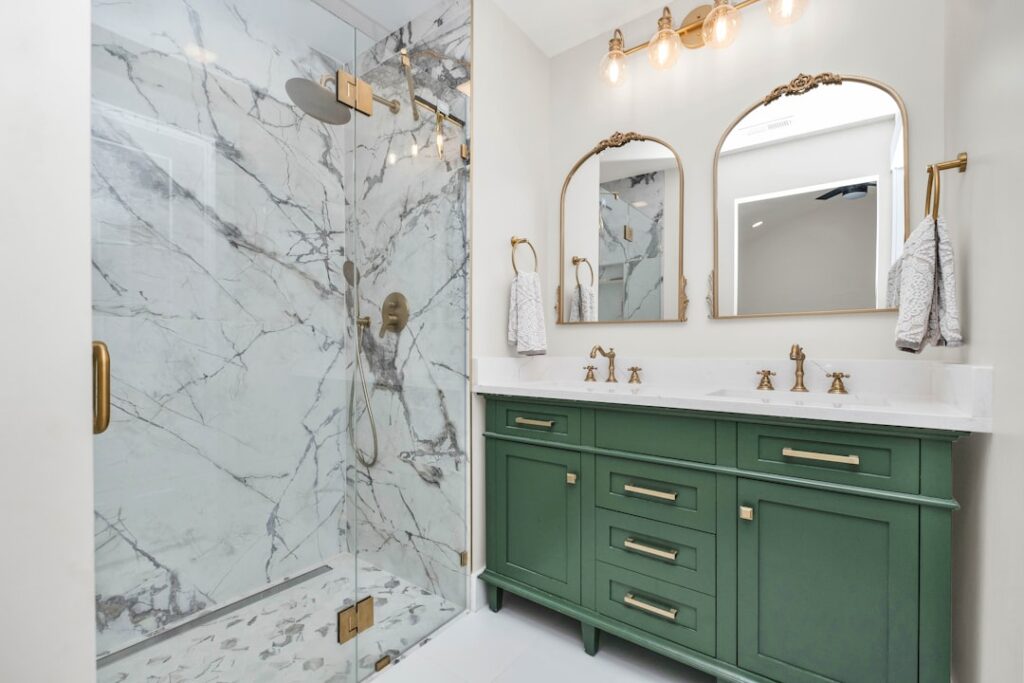
Why a Bathtub to Shower Conversion is Worth Considering
Bathtub to shower conversion is a smart and stylish way to remodel your bathroom, enhancing both its functionality and aesthetic appeal. If you’re considering this change, here’s what you need to know:
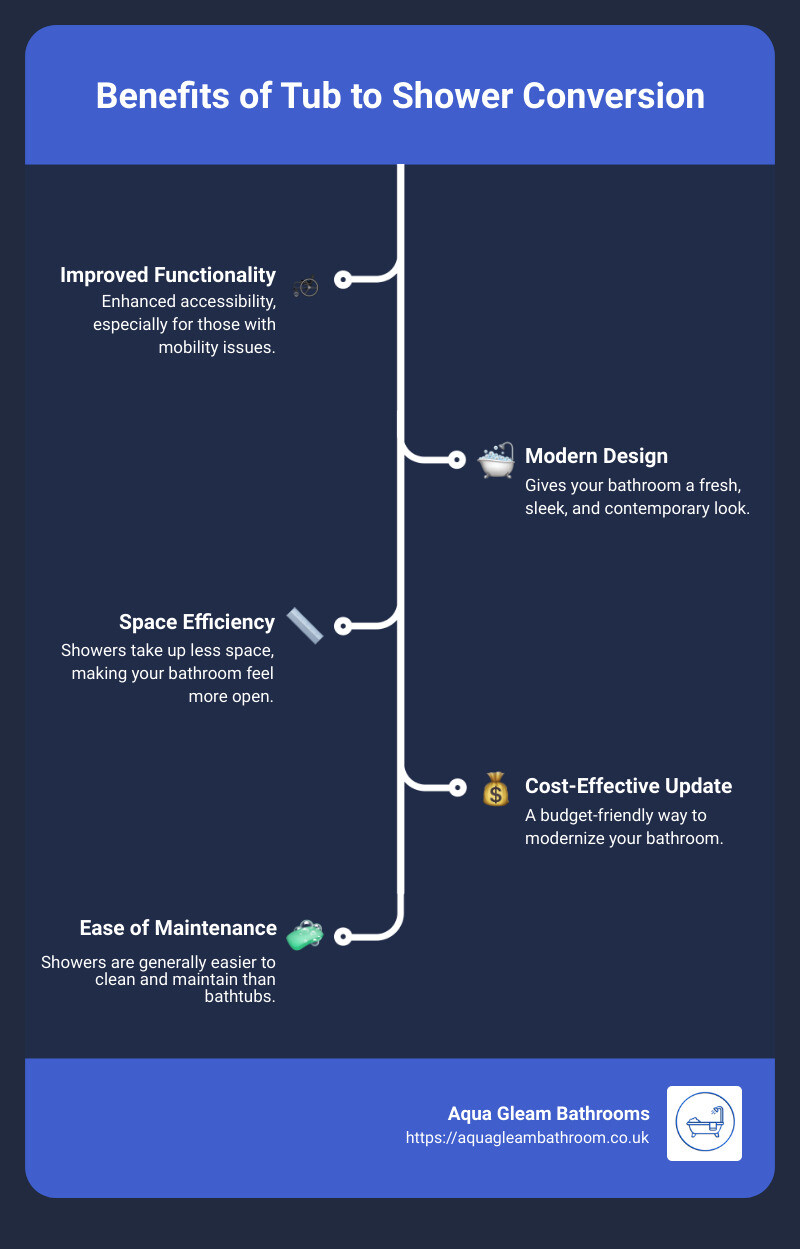
- Improved Functionality: Switching from a tub to a shower can make your bathroom more accessible, especially for those with mobility issues.
- Modern Design: Showers can give your bathroom a fresh, updated look that’s both sleek and contemporary.
- Space Efficiency: Showers typically take up less space than bathtubs, making your bathroom feel more open.
A bathroom remodel offers a unique chance to transform your space to better fit your needs. When you replace a tub with a shower, you’re not just making a surface-level change; you’re enhancing usability and convenience for yourself and your family. Consider who uses the bathroom the most. For example, a walk-in shower with grab bars and a shower seat can be a game-changer for individuals with limited mobility. Alternatively, young families might still prefer a tub for bathtime ease.
In addition to functionality and accessibility, a tub-to-shower conversion is a cost-effective way to modernize your bathroom. From seamless acrylic walls to stylish glass doors, this upgrade can make an outdated space feel brand new. Plus, keeping maintenance in mind, showers are often easier to clean and maintain compared to bathtubs.
Ready to dive in? Let’s explore everything you need to know about converting your bathtub to a shower, so you can make an informed decision and achieve the bathroom of your dreams.
Benefits of Tub to Shower Conversions
Modernizes Space
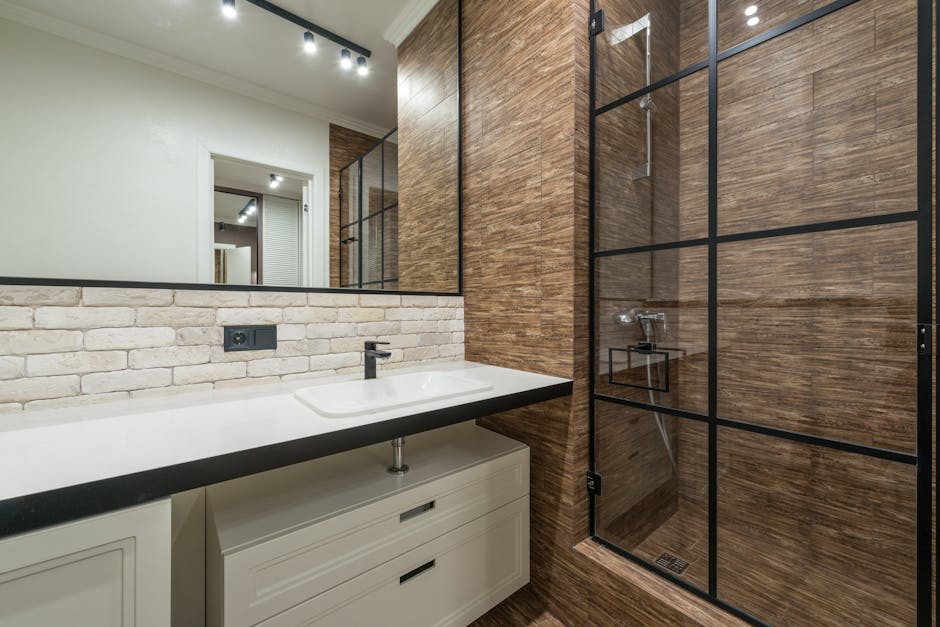
Converting a tub to a shower can instantly modernize your bathroom. Showers often have a sleek, contemporary design that can make any space look fresh and updated. For instance, replacing an old tub with a walk-in shower featuring glass doors and seamless acrylic walls can create a clean, modern aesthetic. This change can make your bathroom feel like a brand-new space, even if other elements remain the same.
Better Accessibility
A shower conversion improves accessibility, making it easier for everyone to use the bathroom. This is particularly beneficial for individuals with limited mobility. Features like grab bars, shower seats, and low-entry thresholds can make a world of difference. For example, Mickey’s remodel project focused on replacing a high-walled tub with a walk-in shower to prepare for potential mobility issues in retirement. His contractor even handled all the paperwork, making the process seamless.

Safety
Safety is a crucial benefit of converting a tub to a shower. Bathtubs can be hazardous, especially for older adults or those with mobility challenges. Showers can be equipped with slip-resistant flooring, grab bars, and handheld showerheads to reduce the risk of falls. Elaine’s bathroom remodel prioritized safety by incorporating a walk-in shower with accessible features like a hand bar and a rough stone floor for extra traction.
Stylish Update
A tub-to-shower conversion also provides a stylish update to your bathroom. You can choose from various designs, materials, and fixtures to match your taste. Whether you prefer the natural look of stone tiles or the sleek feel of seamless glass, the options are endless. Consider adding elements like rainfall showerheads, built-in benches, or recessed shelving to lift the style and functionality of your shower.

In summary, converting your tub to a shower can modernize your bathroom, improve accessibility, improve safety, and provide a stylish update. It’s a practical and visually appealing way to make your bathroom more functional and enjoyable.
Next, let’s dive into the costs associated with a bathtub to shower conversion.
Cost of Bathtub to Shower Conversion
Converting a bathtub to a shower typically costs between $1,200 and $8,000, with the average cost being around $3,000. The total expense can vary significantly based on several factors, including the size of the shower, materials used, and any additional features or upgrades.
Factors Affecting Cost
-
Shower Size
- Standard sizes are more cost-effective. Custom sizes, even if smaller, can increase costs.
- Prefabricated kits are the least expensive option, starting at around $700.
- Larger, custom showers can go up to $8,000 or more.
-
Shower Type
- Square Corner Shower Stall: $350 to $1,400
- Neo-Angle Shower Stall: $450 to $1,200
- Corner Shower Stall (Curved/Rounded): $500 to $1,300
- Rectangular Shower Stall: $500 to $2,300
- Walk-In Shower: $2,100 to $4,000
- Custom Tiled Shower: At least $25 per square foot
-
Materials
- Acrylic: Least expensive and cost-effective.
- Fiberglass: Durable but more expensive.
- Cultured Marble: Similar in cost to acrylic but offers a different aesthetic.
- Custom Tiles: Ceramic is the least expensive, while natural stone is the most costly.
-
Bathtub Removal
- Costs between $450 and $2,000 for removal, disposal, and cleanup.
-
Permits
- Depending on your location, permits can range from $180 to $2,000.
-
Repairs or Replacement Parts
- Additional costs may arise if there is damage to walls, tiles, or plumbing that needs repair.
-
Accessibility and Safety Features
- Adding features like grab bars, seats, and slip-resistant flooring will increase the overall cost.
-
Upgraded Fixtures
- Special showerheads, doors, faucets, and other fixtures will add to the expense.
Plumbing Expenses
Plumbing can be a significant part of the cost. If the existing plumbing is in good condition and the shower drain stays in the same location, costs will be lower. However, moving the drain or making extensive plumbing changes can increase expenses.
For example, Laura and Randy’s Upper East Side co-op renovation included moving plumbing to install a modern walk-in shower with multiple showerheads. This added to their overall costs but provided a luxurious and functional upgrade.
In summary, the cost of a bathtub to shower conversion depends on various factors, including the size and type of shower, materials, and any additional features. It’s essential to plan and budget accordingly to ensure a successful and satisfying renovation.
Steps to Convert Your Bathtub to a Shower
Converting your bathtub to a shower can transform your bathroom into a more functional and modern space. Here’s a step-by-step guide to help you through the process.
1. Enclosure Options
First, decide on the type of shower enclosure you want. Common options include:
- Glass Doors: Provide a sleek and modern look. They come in various styles like framed, frameless, and semi-frameless.
- Sliding Doors: Ideal for smaller bathrooms where space is limited.
- Shower Curtain: An affordable and easy-to-install option, though less modern compared to glass doors.
2. Prepare the Space
Before installation, you’ll need to prepare the bathroom:
- Remove the Bathtub: Carefully remove the existing tub. This usually involves cutting away old caulk, disconnecting plumbing, and lifting out the tub.
- Inspect Plumbing: Check the condition of the existing plumbing. If it’s in good shape and the drain location stays the same, you’ll save on costs. If changes are needed, this is the time to make them.
3. Install the Shower Base
Next, install the shower base:
- Position the Base: Place the shower base in the designated spot. Ensure it’s level by adjusting shims if necessary.
- Secure the Base: Follow the manufacturer’s instructions to secure the base to the floor.
4. Build the Shower Walls
Choose your wall materials:
- Acrylic or Fiberglass Panels: Easy to install and maintain.
- Tile: Offers a customizable and luxurious look but requires more effort and skill to install.
Install the walls according to the material you’ve chosen, ensuring they are waterproofed properly to prevent leaks.
5. Install Fixtures and Accessories
Add the functional elements:
- Showerhead and Faucet: Position these according to your preference. Follow the manufacturer’s instructions for installation.
- Grab Bars and Seats: Essential for accessibility and safety, especially for individuals with mobility issues.
- Shelving and Storage: Built-in niches or shelves can provide convenient storage for toiletries.
6. Final Touches
Complete the installation with these final steps:
- Seal the Edges: Use silicone caulk to seal the edges where the shower base meets the walls and floor. This prevents water leaks.
- Install the Enclosure: Whether you chose glass doors, sliding doors, or a shower curtain, install it now following the manufacturer’s instructions.
- Test the Shower: Turn on the water and check for leaks. Ensure everything is functioning correctly.
By following these steps, you can successfully convert your bathtub into a shower, creating a modern and functional bathroom space. Next, we’ll look at how to choose the right materials and fixtures for your new shower.
Choosing the Right Materials and Fixtures
Selecting the right materials and fixtures is crucial for a successful bathtub to shower conversion. Here are some key considerations:
Glass Doors
Glass doors offer a sleek, modern look and can make a small bathroom feel more spacious. Options include:
- Framed Glass Doors: Provide a classic look and are generally more affordable.
- Frameless Glass Doors: Offer a clean, minimalist aesthetic but may be pricier.
- Semi-Frameless Glass Doors: A balance between cost and style.
Glass doors are easy to clean and maintain, often just requiring a quick wipe-down to keep them looking pristine.
Seamless Acrylic Walls
Seamless acrylic walls are a popular choice for their durability and ease of maintenance. These walls:
- Resist Mold and Mildew: Making them a hygienic option.
- Come in Various Designs: From plain to textured finishes, allowing you to match your aesthetic.
- Are Easy to Clean: Simply wipe down with a non-abrasive cleaner.
Acrylic walls are also quicker to install compared to traditional tiles.
Grab Bars
Safety should always be a priority. Grab bars are essential, especially for individuals with mobility issues. Benefits include:
- Added Stability: Helps prevent slips and falls.
- Versatile Placement: Can be installed vertically, horizontally, or at an angle.
- Stylish Options: Available in various finishes to match your shower fixtures.
Shower Seats
A shower seat adds both comfort and safety. Consider:
- Foldable Seats: Save space when not in use.
- Built-In Benches: Offer a more permanent solution but require more space.
- Portable Stools: Can be moved as needed and are ideal for smaller showers.
Slip-Resistant Technology
Slip-resistant technology is crucial for preventing accidents. Options include:
- Textured Shower Bases: Provide natural traction.
- Slip-Resistant Coatings: Can be applied to existing surfaces for added safety.
- Non-Slip Mats: An easy and affordable solution, though less permanent.
By carefully selecting the right materials and fixtures, you can ensure your new shower is both functional and stylish. Next, we’ll explore maintenance and cleaning considerations to keep your shower looking its best.
Maintenance and Cleaning Considerations
When planning a bathtub to shower conversion, consider the maintenance and cleaning effort involved. Here are the key points to keep in mind:
Cleaning Effort
Cleaning a shower can be easier and less time-consuming compared to a bathtub. Showers typically require less bending and scrubbing, which can be a significant advantage for those with limited mobility.
- Glass Doors: These are straightforward to maintain. A quick wipe-down with a squeegee or a microfiber cloth after each use can prevent water spots and soap scum buildup.
- Seamless Acrylic Walls: These walls are resistant to mold and mildew, making them easy to clean with a non-abrasive cleaner. Regular maintenance involves a simple wipe-down to keep them looking fresh.
Glass vs. Tub
Choosing between glass doors and a traditional tub can impact your cleaning routine:
- Glass Doors: They offer a sleek look but can show water spots and soap scum if not regularly cleaned. However, they are easier to clean than the deep scrubbing often required for a tub.
- Bathtubs: Cleaning a tub can be more labor-intensive, especially if it’s used frequently. Soap scum and hard water stains can build up quickly, requiring more effort to keep it clean.
Limited Mobility
For individuals with limited mobility, the ease of cleaning a shower can be a significant benefit:
- Shower Seats: These can make showering more comfortable and safer. Foldable seats save space, while built-in benches offer a more permanent solution.
- Grab Bars: These provide added stability and make cleaning easier by offering support while reaching different areas of the shower.
Additional Tips
- Regular Maintenance: To keep your shower looking its best, establish a regular cleaning routine. This can help prevent the buildup of soap scum and hard water stains.
- Use the Right Products: Choose non-abrasive cleaners to avoid damaging surfaces. For glass doors, a mixture of water and vinegar can be effective.
- Ventilation: Proper ventilation helps reduce humidity, preventing mold and mildew growth. Use an exhaust fan or open a window during and after showering.
By considering these maintenance and cleaning factors, you can ensure your new shower remains both functional and easy to maintain. Next, we’ll address some frequently asked questions about bathtub to shower conversions.
Frequently Asked Questions about Bathtub to Shower Conversions
How much does it cost to convert a bathtub to a shower?
Converting a bathtub to a shower typically costs between $1,200 and $8,000, with an average cost of $3,000. The final cost depends on several factors:
- Shower Size: Larger showers require more materials and labor, increasing the price.
- Shower Type: Prefabricated kits are cheaper, while custom designs cost more.
- Materials: Acrylic and cultured marble are more affordable than fiberglass or natural stone.
- Plumbing: Modifications to existing plumbing can add to the cost.
- Additional Features: Extras like glass doors, grab bars, and slip-resistant technology also affect the price.
Is it easy to convert a tub to a walk-in shower?
The ease of converting a tub to a walk-in shower depends on several factors:
- Installation Time: A straightforward conversion can take a few days, while more complex projects requiring plumbing modifications or custom designs may take longer.
- DIY vs. Professional: While a DIY approach can save on labor costs, it requires a certain level of skill. Hiring a professional ensures high-quality workmanship and can prevent costly mistakes.
Is it a good idea to remove a bathtub and install a shower?
Removing a bathtub and installing a shower can be a great idea for several reasons:
- Modernization: Showers can give your bathroom a modern, stylish look.
- Accessibility: Showers are easier to access, especially for individuals with limited mobility. Features like grab bars and shower seats improve safety.
- Safety: Showers reduce the risk of slips and falls, making them a safer option for everyone in the household.
Converting a bathtub to a shower is a decision that depends on your specific needs and lifestyle. Whether you prioritize modern design, accessibility, or safety, a well-executed conversion can significantly improve your bathroom’s functionality and aesthetics.
Conclusion
At Aqua Gleam Bathrooms, we understand that changing your bathroom is more than just a renovation—it’s about creating a space that works for you and your family. Our team prides itself on high-quality workmanship and attention to detail to ensure that your new bathroom not only meets but exceeds your expectations.
We offer comprehensive services from design to installation, so you don’t have to worry about coordinating multiple contractors. Our professionals handle everything, ensuring a seamless and stress-free experience. From careful planning to precise execution, we pay meticulous attention to every detail, guaranteeing a bathroom that is both functional and beautiful.
One of the standout features of Aqua Gleam Bathrooms is our commitment to custom solutions. We believe every home and homeowner is unique, and we work closely with you to create a bathroom that reflects your style and meets your needs. Our Design Consultants will bring your ideas to life with a custom-made 360° design, ensuring every element is just right.
Moreover, we offer a 2-year workmanship guarantee in addition to all product guarantees, giving you complete peace of mind. With Aqua Gleam Bathrooms, you’re not just getting a service; you’re getting a partner dedicated to making your dream bathroom a reality.
Ready to transform your bathroom? Visit Aqua Gleam Bathrooms to get started on your bathtub to shower conversion today. Let’s create a space that combines luxury, comfort, and style, custom just for you.