

When embarking on a bathroom upgrade, the most crucial step often overlooked is waterproofing your shower tiles. Many homeowners are under the impression that tiles and grout alone can keep water at bay, but this is a common misconception. Tiles are indeed resistant to water, but not completely waterproof. Without proper waterproofing, water can seep through, leading to mold, mildew, and structural damage, which can be both costly and harmful to your health.
Waterproofing is not just a recommendation; it’s an essential part of maintaining the integrity of your bathroom. Ignoring it could mean facing unwanted pests, mold growth, and foundational issues sooner than you’d think. Waterproofing before tiling ensures that the space behind your tiles remains dry, protecting your home from the potential for significant damage.
To address the search intent straight away, here are the key points on how to waterproof tiles in a shower:
– Ensure waterproofing both below and above the tile surface: Use membranes and sealants.
– Deal with common misconceptions: Tiles and grout alone are not waterproof.
– Understand the risks: Poor waterproofing can lead to mold, mildew, and structural issues.
– Consider professional help: For ensuring the waterproofing is done correctly.
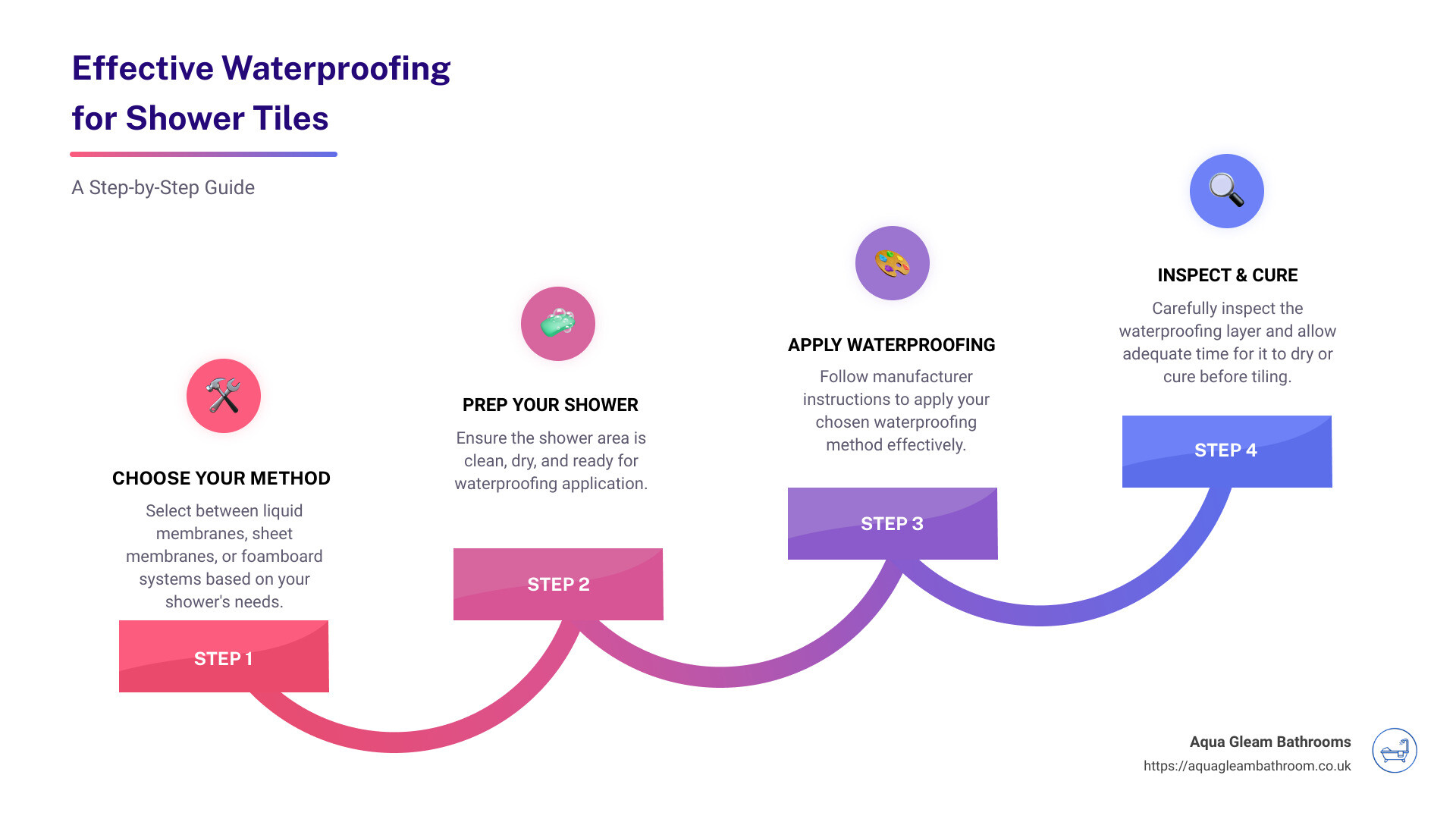
Getting waterproofing right from the start can save you time, money, and stress in the long run. Let’s dive deeper into the most effective methods and how Aqua Gleam Bathrooms can help Cardiff homeowners create beautiful, functional, and durable bathroom spaces.
Understanding Shower Waterproofing
When it comes to how to waterproof tiles in a shower, understanding the basics is crucial. The goal is to prevent water damage, mold growth, and ensure the longevity of your bathroom. Here’s what you need to know:
Tiles and Grout
- Tiles: While tiles are inherently water-resistant, especially ceramic and porcelain, they are not entirely waterproof. Water can seep through tiny pores present in the material.
- Grout: Grout is even more porous than tiles. It’s the material that fills the gaps between tiles, and it’s highly susceptible to water absorption. This can lead to water damage in the substrate beneath the tiles.
Waterproof vs. Water-Resistant
- Waterproof: This term means that water cannot penetrate through the material at all. For a shower area to be considered waterproof, it must be treated with specific materials that block water entirely.
- Water-Resistant: This is often confused with waterproof. Water-resistant materials can delay water penetration but not prevent it entirely. Tiles and grout are water-resistant, not waterproof.
Understanding this distinction is essential for effectively waterproofing your shower. Simply put, while your tiles and grout can handle splashes and dampness, they’re not equipped to protect your bathroom from the prolonged exposure to water and steam that showers generate.
To achieve a truly waterproof shower, additional measures need to be taken. This involves applying waterproofing membranes beneath the tiles and over the substrate to create a barrier that water cannot penetrate. Aqua Gleam Bathrooms specializes in such solutions, offering various waterproofing methods tailored to your specific needs.
For Cardiff homeowners, ensuring your shower is not just water-resistant but waterproof is key to preventing costly damage and maintaining a healthy, mold-free bathroom environment. Aqua Gleam Bathrooms can guide you through the best practices, from selecting the right waterproofing membrane to professional installation, ensuring your shower remains dry and damage-free for years to come.
Next, we’ll explore the best waterproofing methods for tile showers, including the benefits and application techniques of liquid membranes, sheet membranes, and foamboard systems. These methods are crucial in transforming a water-resistant shower into a waterproof sanctuary.
Best Waterproofing Methods for Tile Showers
When it comes to keeping your shower safe from water damage, there are three main heroes in the story of waterproofing: Liquid Membranes, Sheet Membranes, and Foamboard Systems. Each has its own set of superpowers, application methods, and benefits. Let’s understand how they work to protect your shower.
Liquid Membranes
Think of liquid membranes like a superhero’s shield, but for your shower walls and floors. RedGard is a popular choice in this category. It’s like painting on a waterproof coat. Here’s how it works:
- Application techniques: You can brush, roll, or spray RedGard directly onto your shower’s surfaces. It’s similar to painting a wall.
- Drying time: After applying the first coat, you’ll need to let it dry completely before going for round two. This ensures no spots are left vulnerable to water.
Liquid membranes are great because they’re relatively easy to apply, even for DIY enthusiasts. Plus, they can get into every nook and cranny, ensuring complete coverage.
Sheet Membranes
Next up, we have the sheet membranes. The Kerdi system is a standout player here. Imagine it as a waterproof blanket that you lay over your shower’s surfaces:
- Installation process: You adhere the Kerdi membrane to the substrate with thin-set mortar. It requires a bit of precision to ensure no overlaps or gaps.
- Advantages: Sheet membranes are visually easier to inspect than liquid options. You can see exactly where it’s been applied, ensuring full coverage.
Sheet membranes shine in their ability to provide a straightforward, visible waterproofing layer, making them a favorite among professionals.
Foamboard Systems
Finally, we have the foamboard systems, with Kerdi Board leading the charge. Think of these as building blocks for your shower, but blocks that keep water out:
- Installation ease: Foamboard systems are lightweight and easy to cut, making them a dream for custom shower shapes and sizes.
- Customization: Kerdi Board can be tailored to fit any shower configuration, offering flexibility in design and installation.
Foamboard systems are especially user-friendly, offering a quick and customizable approach to shower waterproofing. They’re perfect for those looking to shape their shower space precisely how they want it.
Each of these methods brings its own strengths to the table. Liquid membranes offer ease of application and versatility. Sheet membranes provide a clear, tangible barrier against water. And Foamboard systems combine ease of use with customization options. Choosing the right one depends on your specific shower needs, design preferences, and how much you’re willing to dive into the DIY aspect of waterproofing.
The goal is to transform your shower from merely water-resistant to thoroughly waterproof. By selecting the best method for your situation, you’re ensuring your shower remains a dry, safe, and damage-free oasis for years to come. With the right approach and materials, learning how to waterproof tiles in a shower can be a straightforward and rewarding process.
Preventing Common Waterproofing Mistakes
When it comes to ensuring your shower is a fortress against water damage, the devil is in the details. Let’s talk about how to dodge some common pitfalls in the waterproofing process, focusing on seam tape application, thinset mortar usage, and inspecting the waterproofing layer.
Seam Tape Application
First up, seam tape. This is your first line of defense in the joints where cement boards meet. A common mistake is not applying the tape smoothly or missing some joints altogether. Here’s how to do it right:
- Ensure every joint is covered. This includes corners and where walls meet the floor.
- Press firmly. The tape should be flat against the surface without bubbles or wrinkles.
- Overlap tape at corners. For extra protection, make sure the tape overlaps at the corners.
If the tape isn’t applied correctly, it’s like leaving your shower’s door open in a storm.
Thinset Mortar Usage
Next, we have thinset mortar. This acts like glue for the seam tape and tiles but also fills any gaps that could harbor moisture. Here’s where people often slip up:
- Mixing. Follow the manufacturer’s instructions for the right consistency. Too thick, and it won’t spread evenly; too runny, and it won’t hold.
- Coverage. Apply the mortar over the seam tape so that it’s completely covered but not so thick that it creates a bulge. Aim for a thin, even layer.
- Let it dry. Patience is key. Allow the mortar to dry fully before moving on to the next step.
A well-applied thinset mortar ensures your seam tape stays in place and provides a smooth surface for the waterproofing membrane.
Inspecting the Waterproofing Layer
Finally, inspecting the waterproofing layer is crucial. After applying your chosen waterproofing method (liquid membrane, sheet membrane, or foam board), you need to:
- Check for gaps. Ensure there are no missed spots or thin areas in the waterproofing layer.
- Look for bubbles. Air bubbles can form a pathway for water. Smooth them out immediately after application.
- Do a final inspection. Once dry, inspect the entire surface. If you find flaws, apply an additional layer of waterproofing material to those areas.
This step is like reviewing a map before a road trip. It ensures you’re fully prepared for the journey ahead—keeping water where it belongs.

By paying close attention to these details, you can avoid common waterproofing mistakes. The goal is to create a continuous barrier that water cannot penetrate. Seam tape should be applied meticulously, thinset mortar used judiciously, and the waterproofing layer inspected rigorously. Each step is crucial in the journey from merely water-resistant to thoroughly waterproof. By selecting the best method for your situation, you’re ensuring your shower remains a dry, safe, and damage-free oasis for years to come. With the right approach and materials, learning how to waterproof tiles in a shower can be a straightforward and rewarding process.
Addressing FAQs in Shower Waterproofing
When it comes to shower waterproofing, there are several questions that frequently pop up. Let’s dive into some of these and provide clear, simple answers.
Can you waterproof a shower without removing tiles?
Yes, you can! Using products like Shower Plug or other advanced sealants, it’s possible to waterproof your shower without the hassle of removing existing tiles. These sealants work by penetrating the tiles and grout, creating a waterproof barrier. It’s a quick fix that can extend the life of your shower without major renovations.
Do I need to waterproof shower walls before tiling?
Absolutely. Waterproofing shower walls before tiling is crucial. It’s not just an extra step; it’s a necessary measure to prevent water damage. Water can seep through tiles and grout, causing damage to your walls and potentially leading to mold and mildew. By applying a waterproof membrane or using waterproof backer boards before tiling, you’re protecting your shower from unseen water damage.
Can you seal tile to make it waterproof?
Here’s the thing: sealing tile can help, but it has its limitations. Sealant can make the surface of the tile more water-resistant but remember, tiles and grout are naturally porous. This means water can still seep through over time. That’s why relying solely on sealant isn’t enough for a truly waterproof shower. Waterproofing membranes are necessary because they provide a continuous barrier against water, unlike sealant which only offers surface-level protection.
In conclusion, while sealants can offer a temporary solution, for long-term protection, the installation of a waterproofing membrane beneath the tiles is essential. It’s not just about keeping the surface dry; it’s about preventing water from reaching areas where it can cause significant damage. Whether you’re renovating or building a new shower, make sure to include this crucial step in your process. A well-waterproofed shower is a long-lasting shower.
Next, we’ll explore the importance of professional installation and how Aqua Gleam Bathrooms can ensure your shower waterproofing is done right.
Conclusion
When it comes to how to waterproof tiles in a shower, understanding the process is crucial, but knowing who can expertly apply that knowledge is just as important. This is where the importance of professional installation cannot be overstated. While DIY projects can be rewarding, the risk of incorrect waterproofing in a shower can lead to costly damages down the line. Moisture issues, mold growth, and structural damage are just a few of the potential problems that can arise from improper waterproofing.
Aqua Gleam Bathrooms stands out in this field, offering expertise and peace of mind when it comes to waterproofing your shower. Our team of professionals is equipped with the right tools, knowledge, and experience to ensure that your shower is not just visually appealing but also functionally sound and waterproof.
By choosing Aqua Gleam Bathrooms, you’re not just hiring a service; you’re investing in a waterproofing solution that will stand the test of time. Our meticulous approach to each project, from selecting the highest quality materials to applying the most effective waterproofing techniques, ensures that your shower remains a sanctuary free from the worries of water damage.
Waterproofing is not just a task; it’s a crucial investment in the longevity and health of your home. Let us take the guesswork and stress out of how to waterproof tiles in a shower. Trust in our expertise to deliver a shower space that you can enjoy worry-free for years to come.
Discover more about how we can transform your bathroom into a beautifully waterproofed space by visiting our bathroom fitters Cardiff service page. Let’s create a space that is both stunning and sustainably waterproofed.
In conclusion, while the technical aspects of shower waterproofing are essential, entrusting this job to professionals like Aqua Gleam Bathrooms ensures that the job is done right the first time. This not only saves you time and money in the long run but also provides peace of mind knowing your home is protected against water damage.