
Introduction
Ever wondered what sets Roman clay vs Venetian plaster apart? If you’re looking to upgrade your bathroom or any other space, here’s a quick rundown:
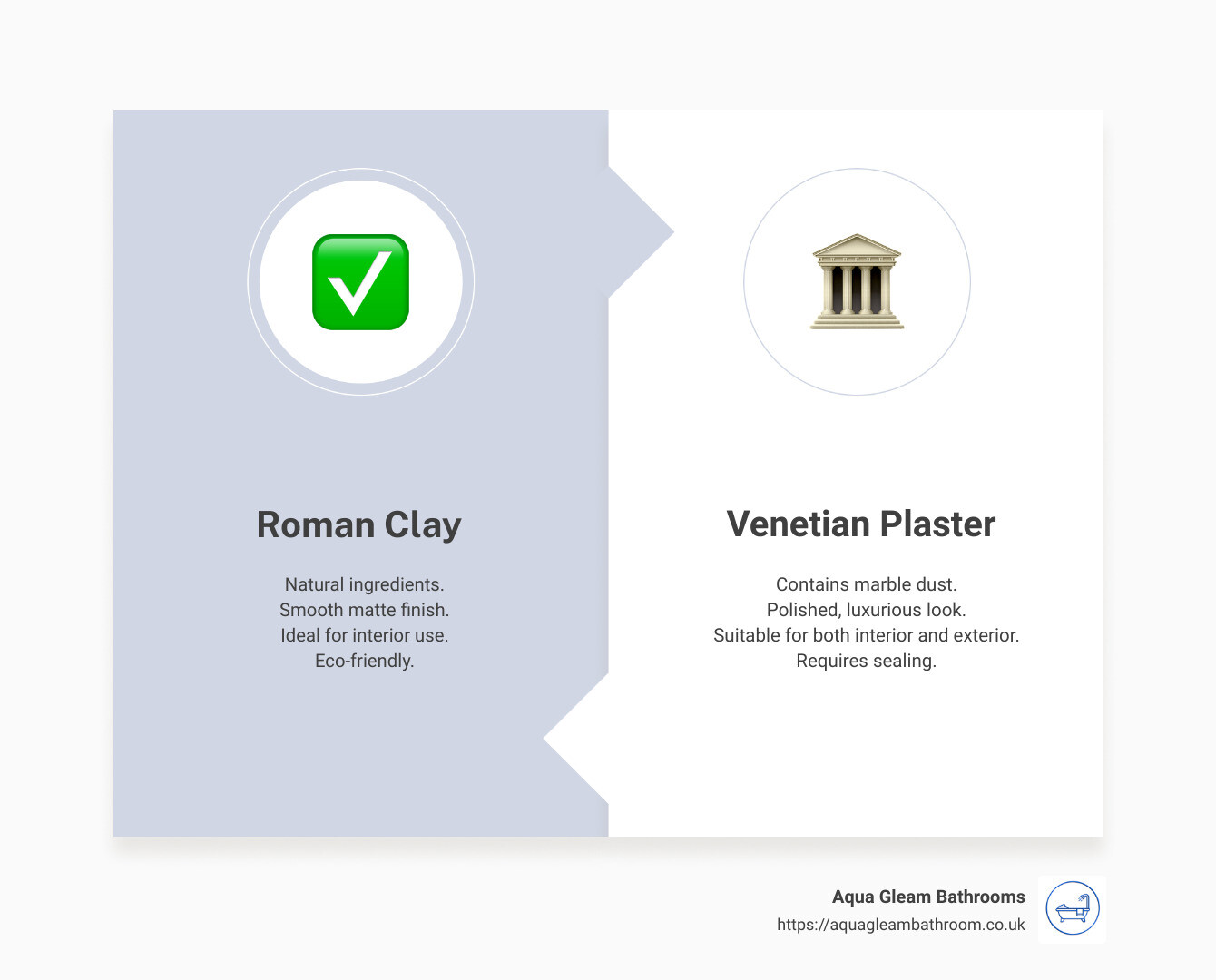
- Roman Clay: Interior-only, smooth matte finish, eco-friendly.
- Venetian Plaster: Interior and exterior use, glossy or matte, luxurious marble look.
Now, let’s dive deeper.
In recent years, Roman clay and Venetian plaster have become popular choices for homeowners in Cardiff aiming to add texture and personality to their living spaces. These unique finishes offer a blend of classic elegance and contemporary style, making them perfect for anyone looking to elevate their home’s aesthetic.
Roman clay is a modern, eco-friendly textured paint that mimics the look of natural stone, making it ideal for interior applications. It has gained popularity for its smooth, rustic finish that adds depth and character to any wall.
On the other hand, Venetian plaster is a time-honored decorative technique dating back to the Renaissance. Known for its luxurious marble-like appearance, it’s versatile enough to be used on both interiors and exteriors, creating a rich, three-dimensional effect.
Understanding these finishes’ unique characteristics can help you choose the perfect one for your home renovation project.
Understanding Roman Clay and Venetian Plaster
Roman Clay
Roman Clay is a specialty textured paint designed to imitate natural stone. This finish is made from natural ingredients and is eco-friendly, with virtually zero VOCs. It is applied using a putty knife or trowel in thin, overlapping layers. Each coat typically takes about 12 to 24 hours to dry, depending on conditions like temperature and humidity.

Composition: Roman Clay is a thicker lime-based paint. Its composition allows for a smooth, subtle finish with a slight sheen, making it perfect for creating an earthy, organic look.
Application: Roman Clay is used exclusively for interiors. It’s applied in overlapping layers with a putty knife or trowel, creating a versatile finish that can range from stone-like to marble-like effects. It’s user-friendly and allows for easy control during application. However, it does require sealing to achieve a wipeable surface, especially in high-traffic areas.
Aesthetic Differences: Roman Clay offers a matte finish with a natural, ultra-low sheen. The final look is smooth to the touch and has a modeling marble-like effect, which can add depth and character to any space. Its earthy aesthetic makes it a popular choice for modern homes, particularly in living rooms and bedrooms.
Venetian Plaster
Venetian Plaster is a more complex and substantial product compared to Roman Clay. Known for its durability and adaptability, it can be used on both interior walls and exterior facades. This finish has a rich history, dating back to the Renaissance, and is renowned for its luxurious, marble-like appearance.
Composition: Venetian Plaster is made from a mixture of water and fired limestone, often combined with marble dust. This gives it the qualities of marble—strength, glamour, and a polished finish. Newer variants may include synthetic resins and polymers, making the application process easier and requiring fewer layers.
Application: Venetian Plaster is applied in several layers with a trowel. Each layer must dry completely before the next is added, creating a three-dimensional illusion of depth and richness. This finish can be either textured or smooth, depending on the desired effect. It is suitable for both interior and exterior use, making it ideal for high-end applications.
Aesthetic Differences: Venetian Plaster creates a stroke-like marbled appearance that can be either matte or shiny. It offers a luxurious, high-end look that can add warmth and character to any space. This finish is particularly effective in high-traffic areas and luxury environments, where durability and aesthetic appeal are paramount.
Understanding these unique characteristics of Roman Clay and Venetian Plaster can help you make an informed decision for your next home renovation project. Next, let’s delve into the key differences between these two finishes, focusing on texture, durability, and cost implications.
Key Differences Between Roman Clay and Venetian Plaster
When it comes to Roman Clay vs Venetian Plaster, understanding the key differences is essential. Let’s break it down by texture, application, and cost.
Texture and Finish
Roman Clay:
– Texture: Roman Clay offers a smooth, subtle texture. It feels earthy and natural, perfect for creating a warm, inviting space.
– Finish: This finish is typically matte with a slight sheen if sealed. The look is understated but elegant.
Venetian Plaster:
– Texture: Venetian Plaster can be both smooth and textured, depending on the application technique. It can mimic the look of polished marble.
– Finish: This plaster can be matte or glossy. It creates a bold, luxurious appearance with a 3-D illusion of depth and richness.
Application Techniques
Roman Clay:
– Trowel Use: Applied with a putty knife or trowel in thin, overlapping layers.
– Layering: Requires multiple layers to achieve the desired effect.
– Drying Time: Each coat typically takes about 12 to 24 hours to dry, depending on conditions like temperature and humidity.
Venetian Plaster:
– Trowel Use: Applied with a trowel in several layers.
– Layering: Each layer must dry completely before the next is applied. This can be more time-consuming but results in a durable, high-end finish.
– Drying Time: Similar to Roman Clay, but given the multiple layers, the total time may be longer.
Cost Implications
Material Costs:
– Roman Clay: Generally more affordable. It is a thicker lime-based paint, making it less expensive than Venetian Plaster.
– Venetian Plaster: Higher cost due to the inclusion of marble dust and other premium ingredients.
Labor Intensity:
– Roman Clay: Easier to apply, making it more DIY-friendly. However, achieving a professional look may still require skilled labor.
– Venetian Plaster: Labor-intensive and typically requires professional application. This increases the overall cost but ensures a high-quality finish.
Understanding these differences in texture, application, and cost can guide you in selecting the right finish for your project. Next, we’ll explore the ideal use cases for each material to help you make an even more informed decision.
Ideal Use Cases for Each Material
Roman Clay in Modern Homes
Interior Design: Roman Clay is perfect for creating smooth, elegant walls that mimic natural stone. This makes it ideal for modern homes aiming for a minimalist or earthy aesthetic. Its subtle texture adds depth without overwhelming the space.
Living Rooms: Roman Clay’s warm, inviting finish makes it a great choice for living rooms. It can transform a plain wall into a sophisticated focal point. The smooth, matte finish complements both traditional and contemporary furniture.
Bedrooms: In bedrooms, Roman Clay creates a calming atmosphere. The natural clay and mineral pigments help regulate humidity and temperature, enhancing comfort. It’s especially suitable for feature walls behind beds or as a backdrop for art.
Specific Room Suitability: Roman Clay works best in low-traffic areas where touch-ups are less frequent. Its earthy tones and matte finish are perfect for spaces where you want a cozy, intimate feel.
Venetian Plaster in Architecture
Interior Design: Venetian Plaster is versatile and luxurious, suitable for both modern and classic interiors. Its ability to create a 3-D illusion of depth and richness makes it a popular choice for high-end homes and commercial spaces.
High Traffic Areas: Due to its durability and resistance to wear and tear, Venetian Plaster is ideal for high-traffic areas like hallways and entryways. The multiple layers provide a tough surface that withstands daily use while maintaining its glamorous appearance.
Luxury Environments: Venetian Plaster is synonymous with luxury. Its polished finish and marble-like appearance make it perfect for upscale settings such as hotels, restaurants, and grand foyers. The material’s adaptability to various weather conditions also makes it suitable for exterior facades.
Exterior Facades: Unlike Roman Clay, Venetian Plaster can be used on exterior walls. Its durability against weather and moisture makes it a strong candidate for outdoor applications. The addition of marble dust during the Renaissance period has endowed it with the strength and glamour we associate with marble.
Specific Room Suitability: Venetian Plaster shines in rooms where you want to make a statement. Think of grand living rooms, dining areas, or even luxury bathrooms. Its ability to create both smooth and textured finishes offers endless design possibilities.
Understanding where each material excels can help you make the right choice for your project. Next, we’ll discuss how to choose between Roman Clay and Venetian Plaster based on your project goals and budget considerations.
How to Choose Between Roman Clay and Venetian Plaster
Choosing between Roman Clay and Venetian Plaster depends on several factors. Let’s break it down to help you decide.
Assessing Your Needs
Project Goals: Start by identifying what you want to achieve with your wall finish. Are you aiming for an earthy, organic look or a polished, luxurious feel? Roman Clay offers a natural, matte finish perfect for creating a cozy and rustic ambiance. On the other hand, Venetian Plaster can give you a high-end, marble-like finish that exudes elegance.
Space Function: Consider where you plan to apply the finish. Roman Clay is ideal for interior spaces like living rooms and bedrooms, providing a warm and inviting atmosphere. Venetian Plaster is versatile, suitable for both interior and exterior applications. It’s excellent for high-traffic areas due to its durability.
Desired Ambiance: Think about the mood you want to create. Roman Clay, with its subtle texture and matte finish, brings a relaxed and earthy vibe. Venetian Plaster, with its ability to be polished to a high sheen, adds a touch of sophistication and luxury.
Budgeting for Materials and Labor
Material Costs: Both materials can vary in price. Roman Clay is generally more affordable, making it a good option for budget-conscious projects. Venetian Plaster, especially those that incorporate marble dust, can be more expensive but offers a more opulent look.
Labor Intensity: The application process for both finishes is labor-intensive and requires skill. Venetian Plaster involves multiple layers and meticulous troweling to achieve the desired effect. Roman Clay is applied in overlapping layers, which can be time-consuming but is often considered easier for DIY enthusiasts.
DIY vs. Professional Installation:
-
DIY: If you’re handy and enjoy tackling home projects, Roman Clay might be more manageable. Its application is user-friendly, and you can achieve a beautiful finish with practice.
-
Professional Installation: For Venetian Plaster, hiring a professional is often recommended. The technique requires expertise to get the smooth, polished look that’s characteristic of this finish. A professional can ensure the job is done right, saving you time and potential frustration.
Long-Term Maintenance
Roman Clay: This finish is relatively low maintenance. It doesn’t require frequent sealing, but adding a topcoat can enhance its durability, especially in high-traffic areas.
Venetian Plaster: Known for its durability, Venetian Plaster can last for years with proper care. It’s resistant to mold and mildew, making it suitable for bathrooms and kitchens. Regular maintenance involves occasional cleaning with mild soap and water.
Space Function and Desired Ambiance
Space Function: Determine how the room is used. High-traffic areas like hallways and kitchens benefit from the durability of Venetian Plaster. Roman Clay is better suited for spaces where you want to create a calm and serene environment.
Desired Ambiance: Roman Clay’s matte, earthy finish is perfect for creating a natural, understated look. Venetian Plaster’s polished, reflective surface can make a room feel more spacious and luxurious.
By carefully considering your project goals, budget, and the specific needs of your space, you can make an informed decision between Roman Clay and Venetian Plaster. Next, we’ll tackle some frequently asked questions to further clarify any doubts you might have.
Frequently Asked Questions about Roman Clay and Venetian Plaster
Does Roman Clay Need to Be Sealed?
Yes, Roman Clay typically needs to be sealed, especially in high-traffic areas. Sealing helps protect the surface from stains and moisture.
- Sealer Types: You can use a matte or slight sheen sealer. Portola’s Roman Clay Topcoat is a popular choice.
- Effect on Appearance: Sealing can darken the color by 10-20%, depending on the shade.
Applying a sealer ensures your Roman Clay finish remains durable and easy to maintain.
How Long Does Venetian Plaster Last?
Venetian Plaster is known for its durability and longevity. When applied correctly, it can last for decades.
- Historical Use: This finish has been used since the Renaissance, proving its resilience over time.
- Maintenance: Regular cleaning and occasional polishing can keep it looking new for years.
Its ability to withstand various weather conditions makes it suitable for both interior and exterior applications.
Can I Apply Roman Clay Myself?
Yes, you can apply Roman Clay yourself, but it requires some practice and patience.
- Application Tools: You’ll need a putty knife or trowel.
- Technique: Apply in thin, overlapping layers to create texture and depth.
- Drying Time: Each coat takes about 12 to 24 hours to dry.
While DIY application is possible, hiring a professional can ensure a flawless finish, especially for larger or more complex projects.
Next, we’ll delve into the specific use cases for Roman Clay and Venetian Plaster to help you determine the best option for your space.
Conclusion
In the battle of Roman Clay vs Venetian Plaster, both materials bring unique qualities to the table. Roman Clay offers a natural, earthy finish perfect for interior walls, creating a cozy and organic ambiance. Venetian Plaster, on the other hand, delivers a polished, luxurious finish that adds depth and elegance to both interior and exterior surfaces.
Roman Clay is ideal for modern homes, especially in living rooms and bedrooms, where a subtle, matte finish can enhance the overall aesthetic. It’s also eco-friendly and virtually zero VOC, making it a safe choice for indoor environments.
Venetian Plaster shines in high-traffic areas and luxury settings. Its durability and versatility make it suitable for a range of applications, from opulent hallways to sophisticated bathrooms. The marble dust in Venetian Plaster not only adds strength but also a timeless, glamorous appeal.
Aqua Gleam Bathrooms: Your Trusted Partner
At Aqua Gleam Bathrooms, we pride ourselves on our expertise in high-quality finishes. Whether you’re leaning towards the rustic charm of Roman Clay or the classic elegance of Venetian Plaster, our skilled artisans are here to bring your vision to life.
We understand that choosing the right finish can be daunting. That’s why we offer comprehensive consultation services to help you make an informed decision based on your space, budget, and aesthetic goals.
Ready to transform your space with stunning plaster finishes? Contact Aqua Gleam Bathrooms today for a free consultation and quote. Let us help you create a space that’s not only beautiful but also uniquely yours.
In the end, the choice between Roman Clay and Venetian Plaster depends on your specific needs and preferences. Both finishes offer distinct advantages and can elevate the look and feel of any room. With Aqua Gleam Bathrooms by your side, you can rest assured that your project will be executed with the highest level of craftsmanship and attention to detail.