

Do Vanity Receptacles Have to Be at Counter Height?
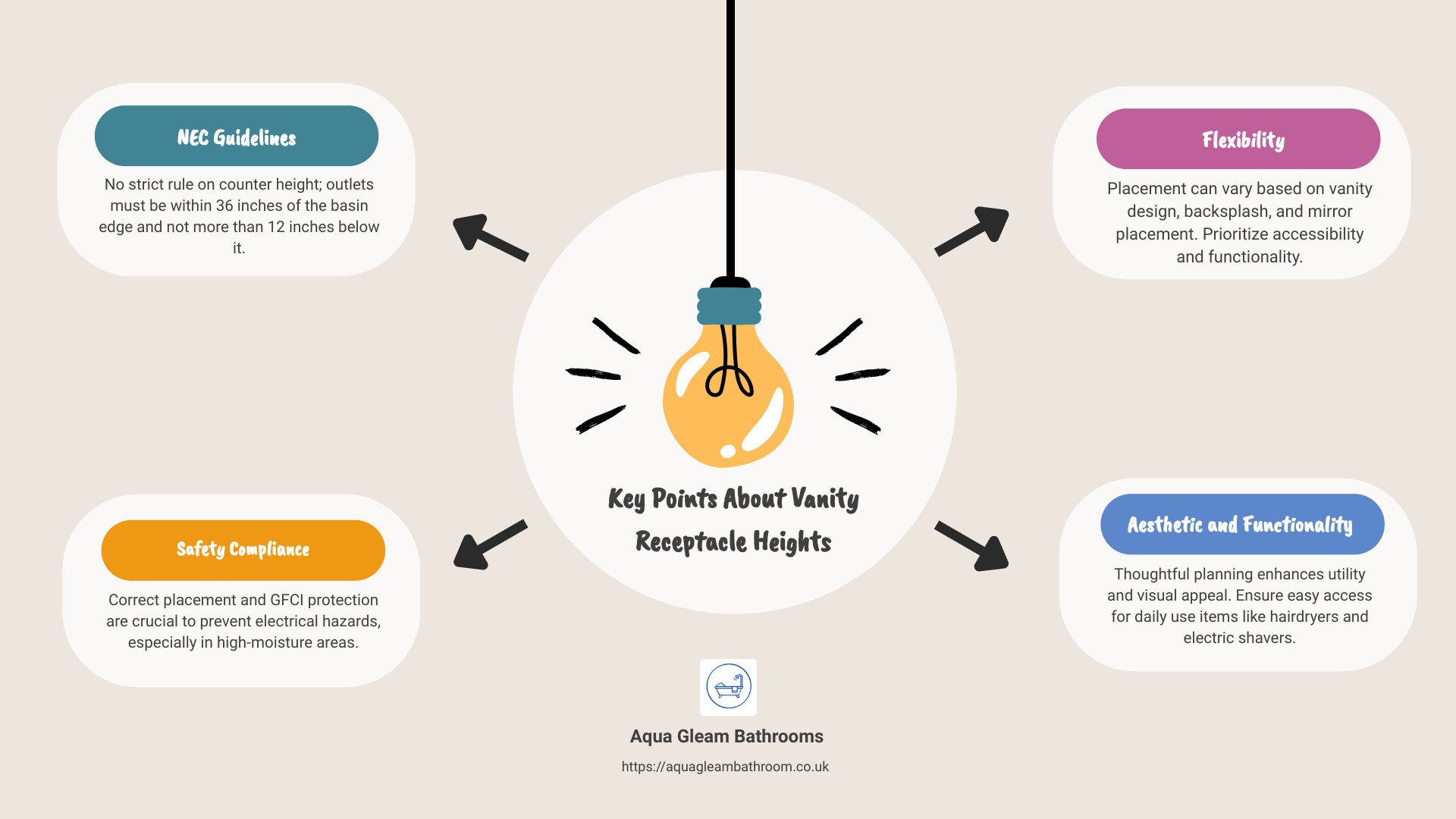
When considering upgrades for your bathroom, one common question is: do vanity receptacles have to be at counter height? The short answer is no, they don’t. However, there are factors to consider for both aesthetics and safety.
Key points to know:
- No strict NEC rule: The National Electrical Code (NEC) does not mandate that vanity receptacles must be at counter height.
- Safety compliance: Outlets need to be within 36 inches of the basin edge and not more than 12 inches below it.
- Flexibility: Placement can vary based on vanity design, backsplash, and mirror placement.
Let’s dive deeper into why the correct height for vanity receptacles is important, focusing on safety and functionality. Functionally, these outlets should be easily accessible for everyday use such as plugging in hairdryers or electric shavers. Safety-wise, especially with bathroom’s high moisture levels, the right placement, along with GFCI (Ground Fault Circuit Interrupter) protection, is crucial to prevent electrical hazards.
Thoughtful planning of outlet height can improve your bathroom’s utility while adhering to safety standards.
Standard Heights for Bathroom Outlets
When planning the electrical layout for your bathroom, understand the standard heights for outlets, especially around vanities. Although there’s no one-size-fits-all rule, several guidelines can help you decide the best placement.
NEC Guidelines
The National Electrical Code (NEC) provides essential safety standards but does not specify a strict height for vanity receptacles. According to the NEC, bathroom outlets must be within 36 inches of the basin edge and not more than 12 inches below the countertop. This flexibility allows you to place outlets where they are most convenient and safe for use.
Common Practices
While the NEC offers flexibility, common practices in the industry can guide you:
- Height from the Floor: Many electricians set vanity receptacles at about 48 inches from the floor to the top screw hole of the outlet box. This ensures they align aesthetically with light switches.
- Above the Countertop: A good rule of thumb is to place outlets at least 4 inches above the countertop or backsplash. This keeps them within easy reach while avoiding splashes from the sink.

GFCI Protection
Given the high moisture levels in bathrooms, Ground Fault Circuit Interrupter (GFCI) protection is non-negotiable. All bathroom outlets must be GFCI-protected to prevent electrical shocks. Ensure your vanity receptacles are connected to a GFCI circuit or use GFCI outlets.
Tip: Always test your GFCI outlets after installation to ensure they function correctly.
By adhering to these guidelines and best practices, you can ensure that your bathroom outlets are both functional and safe.
Do Vanity Receptacles Have to Be at Counter Height?
When considering upgrades for your bathroom, one common question is: do vanity receptacles have to be at counter height? The short answer is no, they don’t. However, there are factors to consider for both aesthetics and safety.
Key points to know:
- No strict NEC rule: The National Electrical Code (NEC) does not mandate that vanity receptacles must be at counter height.
- Safety compliance: Outlets need to be within 36 inches of the basin edge and not more than 12 inches below it.
- Flexibility: Placement can vary based on vanity design, backsplash, and mirror placement.
Let’s dive deeper into why the correct height for vanity receptacles is important, focusing on safety and functionality. Functionally, these outlets should be easily accessible for everyday use such as plugging in hairdryers or electric shavers. Safety-wise, especially with bathroom’s high moisture levels, the right placement, along with GFCI (Ground Fault Circuit Interrupter) protection, is crucial to prevent electrical hazards.
Thoughtful planning of outlet height can improve your bathroom’s utility while adhering to safety standards.
Installation Tips for Vanity Receptacles
Step-by-Step Guide
When installing vanity receptacles, careful planning and precise execution are essential. Here’s a step-by-step guide to ensure your installation goes smoothly:
Measuring
- Determine the Height: Measure from the floor to the desired height of the receptacle. Common heights include 42 to 48 inches from the floor to the top of the receptacle box, but adjust based on your vanity and backsplash height.
- Mark the Wall: Use a pencil and a level to mark the exact spot where the receptacle box will be installed. This ensures your outlets are straight and evenly spaced.
Placement
- Avoid Obstacles: Ensure the receptacle is not directly above the sink or in a place where it might interfere with the mirror. Aim for at least 4 inches above the countertop or backsplash.
- GFCI Placement: All bathroom outlets must be GFCI protected. Place the GFCI outlet in a central location to protect other outlets on the same circuit.
Tools
- Measuring Tape: For accurate measurements.
- Level: To ensure your markings are straight.
- Pencil: For marking the wall.
- Drill: For making holes if needed.
- Wire Strippers: To strip the insulation from the wires.
- Screwdrivers: Both flathead and Phillips for various screws.
- Voltage Tester: To ensure the power is off before starting work.
Preparation
- Turn Off Power: Switch off the power to the bathroom at the circuit breaker to ensure safety.
- Cut Openings: Use a drywall saw to cut the openings for your receptacle boxes based on your measurements.
- Run Wiring: If you’re adding new outlets, run the electrical wiring from your power source to the new receptacle locations.
Installation
- Install Boxes: Secure the electrical boxes into the wall openings.
- Connect Wires: Strip the ends of the wires and connect them to the appropriate terminals on the receptacle. Typically, black (hot) to brass, white (neutral) to silver, and green or bare (ground) to the green screw.
- Mount Receptacles: Carefully push the wires into the box and screw the receptacle into place.
Finishing Touches
- Attach Cover Plates: Once the receptacles are securely mounted, attach the cover plates.
- Test the Outlets: Turn the power back on and use a voltage tester to ensure the outlets are working correctly.
- Check GFCI: Test the GFCI outlet by pressing the “Test” and “Reset” buttons to ensure it trips and resets properly.
By following these steps, you can confidently install vanity receptacles that are both functional and aesthetically pleasing. Proper placement and careful installation will ensure your bathroom is safe and convenient for all users.
Frequently Asked Questions about Vanity Receptacle Heights
How high should a vanity receptacle be?
The height of a vanity receptacle can vary, but there are some common practices. Most electricians recommend placing the receptacle box between 42 to 48 inches from the floor to the top of the box. This range ensures the outlets are easily accessible without being too close to the countertop.
However, the actual height can depend on your vanity’s height. If your vanity is taller or shorter than the standard 32-38 inches, you might need to adjust the receptacle height accordingly. The goal is to keep the receptacle at least 4 inches above the countertop or backsplash, ensuring it’s practical and aesthetically pleasing.
What are the requirements for a bathroom vanity outlet?
GFCI Protection
All bathroom outlets must be GFCI (Ground Fault Circuit Interrupter) protected. This is crucial for safety, as GFCI outlets help prevent electric shock in wet environments by shutting off the power if a ground fault is detected. You can install a GFCI outlet directly or use a GFCI breaker to protect the entire circuit.
Circuit Requirements
Bathrooms typically require a dedicated 20-amp circuit for outlets. This ensures that the outlets have enough power to handle devices like hair dryers and electric razors without tripping the breaker. Always check your local electrical codes, as they can have specific requirements.
Where should bathroom receptacles be placed?
Placement Tips
-
Distance from Sink: Receptacles should be placed within 36 inches of the edge of the sink to ensure they are convenient for use. However, avoid placing them directly above the sink to prevent water exposure.
-
Above Countertop: Keep the outlets at least 4 inches above the countertop or backsplash. This helps protect them from water splashes and makes them easier to use.
-
Avoid Obstacles: Ensure that outlets do not interfere with mirrors or other fixtures. Placing them to the side of the vanity can be a good strategy.
Safety Considerations
-
Accessibility: Make sure the outlets are easily reachable without bending too low or stretching too high. This is especially important for users with limited mobility.
-
Clearance: Maintain at least a 12-inch clearance below the countertop if placing outlets underneath. This ensures they are still accessible and safe from potential spills.
By following these guidelines, you can ensure that your vanity receptacles are both functional and compliant with safety standards. Proper placement and adherence to electrical codes will make your bathroom safer and more convenient.
Now that we have covered the frequently asked questions about vanity receptacle heights, let’s move on to the final thoughts and tips to wrap up everything we’ve discussed.
Conclusion
In summary, do vanity receptacles have to be at counter height? The answer is no. While the National Electrical Code (NEC) provides guidelines, there is flexibility in placement. This flexibility allows you to consider factors like vanity height, backsplash, and mirror placement to ensure both functionality and aesthetics.
Aqua Gleam Bathrooms is here to help you steer these decisions. Our professional team understands the importance of creating a safe and stylish bathroom environment. We can assist you in choosing the right height for your vanity receptacles, considering all the factors we’ve discussed.
Final Tips
-
Follow NEC Guidelines: Ensure your receptacles are within 36 inches of the basin edge and no more than 12 inches below the basin.
-
GFCI Protection: Always use GFCI outlets to prevent electric shock in wet environments.
-
Consider Vanity Height: Adjust the receptacle height based on your vanity’s dimensions to maintain both practicality and visual appeal.
-
Plan for Accessibility: Make sure the outlets are easily reachable, especially for users with limited mobility.
-
Avoid Obstacles: Place outlets in positions where they won’t interfere with mirrors or other fixtures.
By adhering to these tips, you can create a bathroom that is both safe and stylish. For more detailed guidance and professional installation services, visit Aqua Gleam Bathrooms.
We hope this guide has clarified your questions about vanity receptacle heights. The right placement can make a significant difference in the functionality and safety of your bathroom. Thank you for choosing Aqua Gleam Bathrooms!