
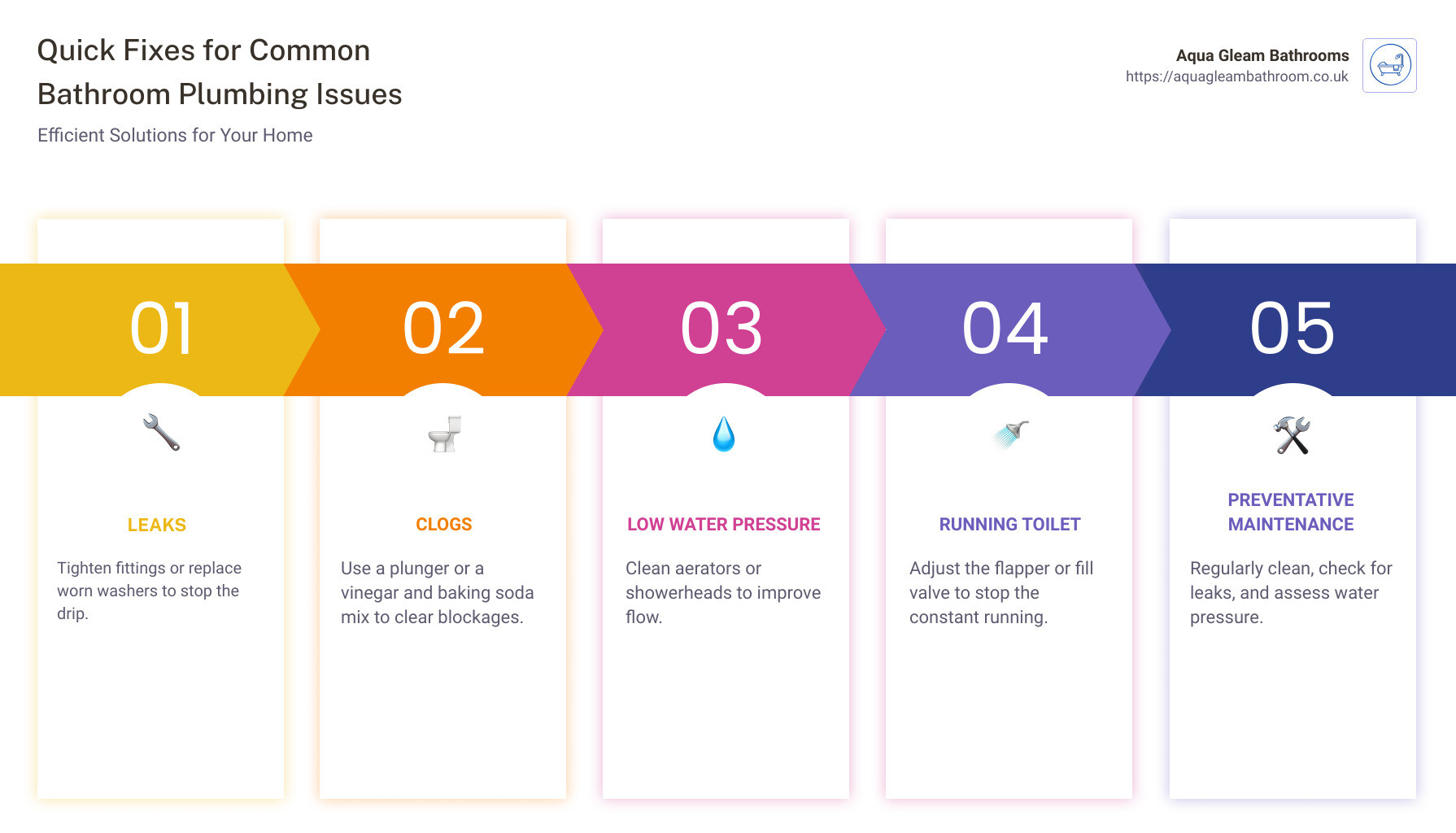
Finding quick and efficient bathroom and plumbing solutions can often feel overwhelming for homeowners. In Cardiff, where preserving the charm of a home while ensuring functionality is key, understanding simple fixes for common bathroom plumbing issues can save time and money. Below are some quick fixes to common problems that usually don’t require more than an hour a day:
- Leaks: Tightening fittings or replacing worn washers.
- Clogs: Using a plunger or a mixture of vinegar and baking soda.
- Low Water Pressure: Cleaning aerators or showerheads.
- Running Toilet: Adjusting the flapper or the fill valve.
These simple steps can be your first line of defense against bathroom plumbing issues, often resolving minor problems before they escalate.
In this guide, we’ll dive deeper into identifying common bathroom plumbing problems and provide step-by-step solutions that any homeowner can implement. Whether you’re facing a leak, clog, or a running toilet, our quick fixes are designed to address your concerns efficiently, ensuring your bathroom remains in top condition. Plus, we’ll touch on preventative measures to avoid these issues in the future, keeping your home’s plumbing system running seamlessly.
Identifying Common Bathroom Plumbing Problems
When it comes to bathroom and plumbing solutions, knowing what you’re up against is half the battle. Let’s break down the most common issues you might face in your bathroom: leaks, clogs, low water pressure, and a running toilet. Understanding these can save you time and stress.
Leaks
Leaks can come from anywhere: your faucet, toilet, or even under the sink. A telltale sign is water pooling where it shouldn’t or a noticeable increase in your water bill. Sometimes, you might hear water running even when all taps are closed.
Clogs
Clogs are a homeowner’s nemesis. They can occur in your sink, shower drain, or toilet. Signs include water draining slowly, water backing up, and gurgling sounds from drains. It’s not just inconvenient but can lead to bigger plumbing woes if left unchecked.
Low Water Pressure
Low water pressure makes for unsatisfying showers and slow sink fills. It can be caused by build-up in your pipes or a more extensive issue in your plumbing system. If it’s just one fixture, the problem might be localized; if it’s house-wide, the issue is more significant.
Running Toilet
A toilet that won’t stop running not only wastes water but can also hike up your water bill significantly. This usually happens when the flapper valve doesn’t seal properly, the fill valve is malfunctioning, or the chain adjustment is off.
Quick Tip: A simple way to check for a leaky toilet is to drop food coloring into the tank. If color appears in the bowl without flushing, you’ve got a leak.
Identifying these issues early can prevent them from escalating into bigger, costlier problems. In the next sections, we’ll cover how to tackle these issues head-on, with both DIY fixes and when to call in a professional from Aqua Gleam Bathrooms for more complex bathroom and plumbing solutions.
Quick Solutions for Clogged Drains
Encountering a clogged drain in your bathroom can be a frustrating experience. However, there are several quick and effective methods to solve this common issue without needing to immediately call in professionals. Let’s dive into some DIY bathroom and plumbing solutions that can get your drains flowing smoothly again in no time.
Plunger
The plunger is your first line of defense against clogged drains. It’s a simple tool that can produce powerful results. Here’s how to use it effectively:
- Fill the sink or tub with enough water to cover the plunger’s head.
- Place the plunger over the drain, ensuring a tight seal.
- Pump the plunger up and down vigorously.
- Pull the plunger off the drain forcefully on your final pull to create additional suction.
This method is often enough to dislodge whatever is blocking your drain.
Vinegar and Baking Soda
This natural solution is safe for your pipes and the environment. Here’s how to use it:
- Pour a pot of boiling water down the drain.
- Follow with 1/2 cup of baking soda. Let it sit for a few minutes.
- Mix 1 cup of vinegar with 1 cup of hot water and pour it over the baking soda.
- Cover the drain with a plug and wait 5-10 minutes.
- Flush the drain with another pot of boiling water.
The chemical reaction between baking soda and vinegar can help break down the gunk causing the blockage.
Chemical Cleaners
When natural solutions don’t work, you might consider a chemical drain cleaner. However, use these products sparingly as they can be harsh on your plumbing over time. Always follow the instructions on the label and ensure the room is well-ventilated.
Snake Tool
A plumber’s snake, or drain auger, is a flexible metal cable with a handle on one end and a small auger or uncoiling mechanism on the other. It can reach deeper into the drain to remove clogs that other methods can’t reach. Here’s a basic guide:
- Slowly feed the snake into the drain until you feel resistance.
- Turn the handle to twist the auger into the clog.
- Pull the snake out to remove the debris. You may need to repeat this process a few times.
These DIY solutions can be very effective for minor clogs. However, if you’ve tried these methods and the problem persists, it might be time to call in the professionals. Aqua Gleam Bathrooms offers expert bathroom and plumbing solutions for issues that require a skilled touch. Regular maintenance can help prevent clogs from happening in the first place, so keep these solutions handy for when you need them.
In the next section, we’ll discuss preventative maintenance tips to keep your bathroom plumbing running smoothly.
Fixing a Running Toilet in Minutes
A running toilet is not just a nuisance; it can also waste a lot of water and increase your utility bills. Fortunately, fixing a running toilet is often simpler than you might think. Here are the key components to check: the flapper valve, the fill valve, and the chain adjustment. Let’s break down how to tackle each issue.
Flapper Valve
The flapper valve is often the culprit behind a running toilet. It’s the rubber seal at the bottom of the tank. If it’s not sealing properly, water leaks from the tank into the bowl continuously.
- Quick Fix: First, shut off the water supply to your toilet. Then, flush the toilet to drain the tank. Check the flapper valve for any wear or damage. If it looks worn out, head to your local hardware store to grab a replacement. They’re inexpensive and easy to install. Simply unclip the old one and clip on the new one.
Fill Valve
The fill valve controls the water refilling the tank after you flush. A malfunctioning fill valve can cause the toilet to run non-stop.
- Quick Fix: Again, start by shutting off the water and draining the tank. Inspect the fill valve (located on the left side of the tank) for signs of wear or damage. If adjustment is needed, most fill valves have a screw or a knob that you can turn to adjust the water level. The water level should be about an inch below the overflow tube. If the fill valve is damaged, it may need to be replaced. Replacement kits are available and come with instructions for DIY installation.
Chain Adjustment
Sometimes the issue is as simple as the chain that connects the flush lever to the flapper valve being too tight or too loose.
- Quick Fix: If the chain is too tight, it might not allow the flapper to seal properly, causing water to leak into the bowl. If it’s too loose, the flapper won’t lift fully when you flush, leading to an incomplete flush. Adjust the chain length so there’s a little slack when the flapper is in the closed position, but not so much that it can get caught under the flapper.
Remember: Always start with the simplest solutions. Many running toilet issues can be resolved with a quick adjustment or a simple part replacement. However, if you’ve tried these fixes and your toilet is still running, it might be time to call in the professionals. Aqua Gleam Bathrooms specializes in bathroom and plumbing solutions, including more complex toilet repairs.
In the next section, we’ll dive into preventative maintenance to avoid future issues and keep your bathroom plumbing running smoothly.
Preventative Maintenance to Avoid Future Issues
Preventative maintenance is like the health check-up for your bathroom plumbing. Just like you’d visit a doctor to prevent future health issues, taking care of your bathroom’s plumbing can prevent future leaks, clogs, and other unwanted problems. Let’s dive into how you can keep your bathroom plumbing in top shape.
Regular Cleaning
Keeping your bathroom clean isn’t just about aesthetics; it’s vital for plumbing health too. Regular cleaning helps prevent buildup in your pipes and drains. For example, hair in the shower drain is a common cause of clogs. A simple drain strainer can catch hair before it causes problems. Also, regularly cleaning your faucets and showerheads can prevent mineral buildup from hard water, which can reduce water flow.
Leak Checks
Leaks in your bathroom can be sneaky and cause significant damage if left unattended. Make it a habit to check under the sink, around the toilet base, and under the bathtub for any signs of moisture or water damage. Early detection can save you from costly repairs. A small drip from a faucet might seem insignificant, but over time, it can waste a lot of water and increase your water bill.
Water Pressure Assessment
Too high or too low water pressure can be a sign of plumbing issues. You can use a water pressure gauge to check your home’s pressure. The ideal water pressure should be between 40-60 psi. If the pressure is too high, it can stress your pipes and lead to leaks. If it’s too low, there might be a clog or leak somewhere in your system. Adjusting the pressure regulator or calling a professional can help solve these issues.
Soft Water Solutions
Hard water, which contains high levels of calcium and magnesium, can cause havoc on your plumbing over time. It leads to mineral buildup inside your pipes, reducing water flow and increasing pressure. It can also shorten the lifespan of your water heater. Installing a water softener can help. Soft water is gentler on your pipes and appliances, reducing the risk of buildup and extending their lifespan.
In Summary:
- Clean Regularly: Use strainers and clean fixtures to prevent buildup.
- Check for Leaks: Regular inspections can catch leaks early.
- Assess Water Pressure: Keep it within the ideal range to protect your pipes.
- Consider Soft Water: A water softener can prevent mineral buildup.
By following these preventative maintenance tips, you can avoid many common bathroom plumbing issues. However, some problems may require professional attention. Aqua Gleam Bathrooms is here to help with all your bathroom and plumbing solutions, ensuring your system runs smoothly and efficiently.
In the next section, we’ll explore when to handle plumbing issues yourself and when it’s time to call in the experts.
Emergency Plumbing Solutions
In bathroom and plumbing solutions, emergencies are like uninvited guests—they show up without warning and demand immediate attention. Whether it’s a burst pipe in the middle of the night or a toilet that won’t stop running, knowing how to respond can save you from a world of mess and expense. Let’s dive into some key strategies to manage these crises efficiently.
24/7 Availability
First things first, it’s crucial to have a go-to emergency contact that offers 24/7 availability. Plumbing disasters don’t wait for business hours. Aqua Gleam Bathrooms understands this and provides prompt and reliable service to address your urgent plumbing needs. Keeping their contact information handy can be a lifesaver when you’re faced with an unexpected plumbing issue.
Leak Detection
Early leak detection is your best defense against potential emergencies. Regular checks around common problem areas, such as under sinks and around toilet bases, can help you catch leaks before they escalate. Aqua Gleam Bathrooms recommends using dye tablets or food coloring in toilet tanks as a simple test for silent leaks that could otherwise go unnoticed.
Burst Pipe Protocol
A burst pipe can cause significant damage in a short amount of time. The first step is to shut off your home’s main water supply immediately. This action can prevent further flooding and give you some control over the situation. Next, open faucets to relieve any remaining pressure in the pipes. Then, call Aqua Gleam Bathrooms or your trusted plumber for emergency repairs. Quick action is key to minimizing damage.
Emergency Shut-off
Knowing the location of your emergency shut-off valve and how to operate it is crucial. In many homes, this valve is located near the water meter or where the main water line enters the house. Familiarize yourself with its operation before an emergency occurs. This knowledge can drastically reduce the amount of water that floods into your home during a plumbing crisis.

In Summary:
- 24/7 Availability: Keep the contact number of a reliable service like Aqua Gleam Bathrooms at your fingertips for emergency situations.
- Leak Detection: Regularly check for leaks and perform simple tests to catch them early.
- Burst Pipe Protocol: Know how to shut off your home’s water supply and call for professional help immediately.
- Emergency Shut-off: Familiarize yourself with the location and operation of your home’s main water shut-off valve.
By preparing for these emergencies and knowing how to respond, you can protect your home from severe damage and potentially save on costly repairs. Aqua Gleam Bathrooms is here to assist with all your emergency plumbing needs, ensuring peace of mind around the clock.
Let’s explore the balance between tackling plumbing projects on your own and when it’s wise to call in the professionals for bathroom and plumbing solutions.
DIY vs. Professional Help
Tackling bathroom and plumbing issues can be a rewarding challenge. But it’s crucial to know when to roll up your sleeves and when to call in the experts. Here’s a straightforward guide to help you make the best choice for your situation.
When to Call a Professional
Some situations require the expertise and tools that only professional plumbers can provide. Here are a few scenarios where it’s best to reach out for help:
- Major Leaks: If you’re facing a significant leak and can’t identify the source, it’s time to call a pro.
- Water Heater Issues: Due to the complexity and potential danger of dealing with water heaters, these problems are best left to professionals.
- Installation of New Fixtures: If you’re adding a new bathroom or renovating, professional installation ensures everything meets code requirements.
- Persistent Clogs: When your efforts can’t resolve a clog, professionals can use advanced tools like camera inspections to find and fix the issue.
DIY Tools
For those times you’re ready to tackle plumbing tasks yourself, here are essential tools to have on hand:
- Plunger: A must-have for dealing with clogged toilets and drains.
- Pipe Wrench: Great for tightening and loosening pipe fittings.
- Adjustable Wrench: Useful for various tasks, including working on fixtures.
- Teflon Tape: Helps prevent leaks on threaded pipe joints.
- Hand Auger (Snake): A more effective tool for clearing tough clogs deep within your pipes.
Having these tools can empower you to address minor repairs and maintenance without waiting for professional help.
Safety Precautions
Safety should always be your top priority when working on plumbing projects. Keep these precautions in mind:
- Know Your Limits: Don’t tackle projects that are beyond your skill level. It can lead to further damage or personal injury.
- Turn Off the Water: Before starting any repair, ensure the water supply is off to avoid flooding.
- Wear Protective Gear: Gloves and safety glasses can protect you from harmful chemicals and debris.
- Be Cautious with Chemicals: Chemical drain cleaners can be effective but use them sparingly as they can damage pipes over time.
Remember, while DIY projects can be satisfying and cost-effective, there’s no substitute for professional expertise when it comes to complex or risky bathroom and plumbing solutions. Aqua Gleam Bathrooms professionals are always ready to assist, ensuring your plumbing system operates smoothly and efficiently.
As we’ve explored the balance between DIY efforts and professional intervention, it’s clear that both approaches have their place in maintaining a functional and trouble-free bathroom. Next, we’ll dive into some of the most frequently asked questions about bathroom plumbing to further empower you with knowledge and solutions.
Frequently Asked Questions about Bathroom Plumbing
When it comes to bathroom and plumbing solutions, having the right information can make all the difference. Let’s tackle some of the most common questions to keep your bathroom in top shape.
What are the signs of hidden bathroom leaks?
Hidden leaks can be sneaky but spotting them early can save you from major headaches later. Here are a few telltale signs:
- Unexpected increase in water bills: A sudden spike in your water bill without a known cause could indicate a leak.
- Mould or mildew presence: Especially if it’s appearing in places that don’t usually get wet.
- Musty odours: Persistent musty smells can signal hidden moisture.
- Wall or floor damage: Look out for peeling paint, wallpaper, or warping floors.
- The sound of running water: Hearing water when all taps are off could mean a leak.
How often should I perform maintenance on my bathroom plumbing?
Regular maintenance is key to avoiding emergencies. Here’s a simple timeline:
- Weekly: Check for slow drains and clear minor clogs.
- Monthly: Inspect pipes under sinks for signs of leaks and test your toilet for running issues.
- Annually: Schedule a professional inspection to catch any hidden problems, and consider having your drains professionally cleaned to prevent buildup.
Can I install a new bathroom fixture myself?
Yes, DIY enthusiasts can tackle simpler installations like a new faucet or showerhead. Here are a few tips:
- Read the manual: Every fixture comes with specific instructions. Follow them closely.
- Shut off the water: Always turn off the water supply to avoid surprises.
- Have the right tools: Ensure you have everything you need before starting.
- Watch tutorials: There are plenty of online videos to guide you through the process.
- Know your limits: If the installation involves major plumbing changes, it might be best to call in the professionals from Aqua Gleam Bathrooms.
While DIY can be rewarding, there’s no substitute for professional expertise when it comes to complex or risky bathroom and plumbing solutions. Aqua Gleam Bathrooms professionals are always ready to assist, ensuring your plumbing system operates smoothly and efficiently.
In conclusion, keeping your bathroom in top condition doesn’t have to be a mystery. With the right knowledge, tools, and occasional professional help, you can tackle most plumbing challenges head-on.
Conclusion
We’ve covered a lot in this guide, from identifying common bathroom plumbing problems to tackling them with quick, effective solutions. But, as we all know, prevention is better than cure. Here are a few preventative tips to keep your bathroom plumbing in pristine condition:
- Regularly inspect your bathroom for any signs of leaks or damage.
- Practice good drain hygiene by avoiding flushing anything down the toilet that doesn’t belong there and using drain strainers to catch hair and other debris.
- Schedule annual maintenance checks with a professional to catch any issues before they escalate.
At Aqua Gleam Bathrooms, we understand the importance of a well-functioning bathroom in your daily life. That’s why we’re dedicated to providing top-notch bathroom and plumbing solutions that not only fix your immediate issues but also help prevent future problems. Whether you’re looking to upgrade your bathroom fixtures, tackle a persistent plumbing issue, or simply seeking advice on maintaining your bathroom’s plumbing, we’re here to help.
Our team of experienced professionals is equipped with the knowledge, tools, and passion to ensure your bathroom is a place of comfort and reliability. Don’t let plumbing issues disrupt your life. Let us handle the complexities of your bathroom plumbing, so you can focus on enjoying your home.
For more information on how we can assist with your bathroom and plumbing needs, visit our bathrooms service page. Let Aqua Gleam Bathrooms be your solution to a stress-free, fully functional bathroom.