

When you’re looking to understand the cost of tile work in 2023, it’s crucial to have a straightforward guide that breaks down everything you need to know in simple terms. Whether you’re updating your bathroom or kitchen, the overall cost of tile installation can vary widely based on several key factors such as the type of tile you choose, the size of the area being tiled, and the complexity of the installation process.
To give you a quick snapshot:
– DIY Installation: Costs can range significantly depending on the materials you choose. For example, ceramic tiles may cost you around $0.50–$15 per square foot for materials alone.
– Professional Installation: Labour can add an additional $4 to $25 per square foot on top of material costs, depending on the complexity and locality.
Tile work, especially in high-impact areas like bathrooms and kitchens, can dramatically improve the aesthetic appeal and functionality of your home. But, it’s also an investment. The cost hinges on choices around the tile material, the area size being renovated, labor charges, and any necessary preparatory work.
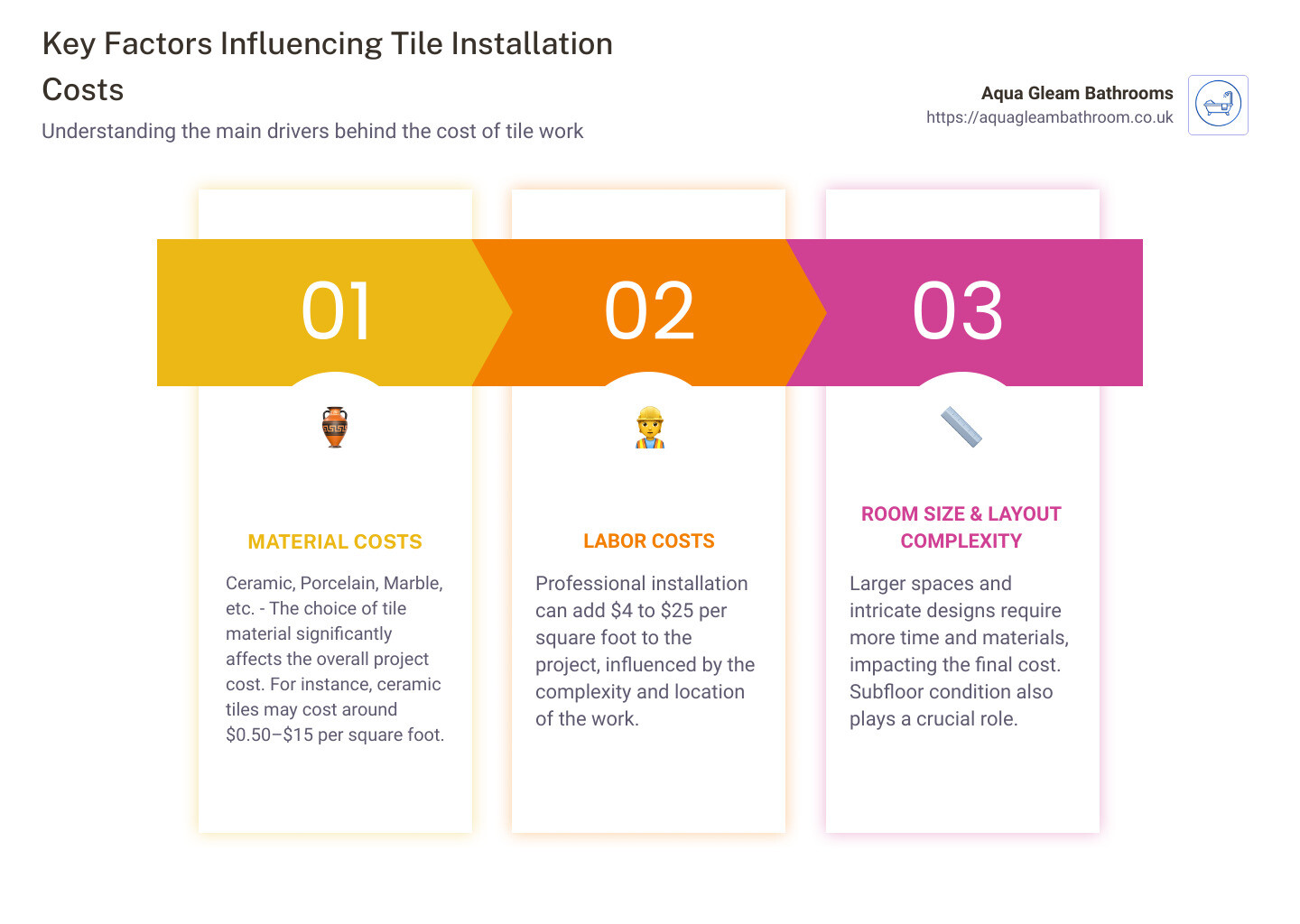
In this introduction, we’ve laid out the key concepts that influence the cost of tile installation, aiming to offer a concise guide for homeowners in Cardiff looking to embark on such a project. In the following sections, we’ll dive deeper into each factor, offering detailed insights to help you make informed decisions about your home improvement endeavors.
Factors Affecting Tile Installation Costs
When you’re considering new tiles, the cost of tile work can feel like a puzzle. Let’s simplify it. We’ll look at the main pieces: materials, labor, room size, and a few extras.
Tile Material and Cost
Materials range widely in price and style. Here’s a quick rundown:
- Ceramic: Affordable and versatile, perfect for budget-friendly projects.
- Travertine: A type of limestone, offers a natural, warm look.
- Porcelain: Tougher than ceramic, great for high-traffic areas.
- Marble: Adds luxury but requires more upkeep.
- Slate: Durable and unique, but needs sealing.
- Granite: Super tough, but on the pricier side.
- Glass: For a splash of color and a modern look.
Each material has its own price tag and installation quirks.
Labor Costs
The cost of labor can vary more than you might think. It ranges based on:
- National average: Generally, you’re looking at $8 to $44 per square foot.
- Per square foot: This is how most professionals will quote you.
- Hourly rates: For smaller jobs, some might charge by the hour.
- Complexity of installation: Intricate patterns cost more due to the time and skill required.
Room Size and Layout Complexity
Bigger rooms mean more tiles and more time, which means higher costs. Intricate tile patterns or layouts can also bump up the price, as they take more time and precision to install.
Subfloor Preparation
Not the most exciting part, but crucial. If your subfloor needs repair or leveling, this can add to the overall cost. Basic repairs might not break the bank, but significant issues can be pricey.
Additional Costs
Don’t forget the extras:
– Grout and finishing: The type of grout can affect costs, as well as any finishing touches.
– Equipment allowance: Sometimes, special equipment is needed, which can add a bit to the bill.
– Removal of old flooring: Pulling up old tiles or carpet? This will be an additional charge.
Understanding these factors can help you navigate the cost of tile work with more confidence. Whether you’re dreaming of a new bathroom oasis or a kitchen refresh, knowing what affects the price can lead to smarter decisions and a smoother project.
Up next, we’ll explore average costs by project size to give you a clearer picture of what to expect for your specific renovation.
Average Costs by Project Size
Understanding the cost of tile work for different project sizes can help you budget more effectively. Let’s dive into the details for small rooms, medium rooms, large areas, and even specific projects like backsplashes and countertops.
Cost to Tile a 12×12 Room
When tiling a 12×12 room, the cost can vary significantly based on the tile material, the complexity of the tile pattern, and the condition of the subfloor. Here’s a breakdown:
- Labor: Typically, labor costs range from $7 to $14 per square foot. For a 12×12 room, which is 144 square feet, labor alone can cost between $1,008 and $2,016.
- Materials: Material costs depend on your choice of tile. Using the previous research, ceramic tiles might cost you $100–$3,000 for a 12×12 room, depending on quality and design.
- Total Estimate: Combining labor and materials, the total cost to tile a 12×12 room can range from $1,108 to $5,016.
Cost to Install 500 Square Feet of Tile
For larger projects, such as installing 500 square feet of tile, the average cost can provide a general idea but remember, factors like tile choice and subfloor condition can affect the final price.
- Average Cost: Based on the previous ranges, for 500 square feet, you might expect to pay between $4,000 and $22,000 for both labor and materials. This broad range accounts for different types of tiles (ceramic, travertine, porcelain) and the complexity of the installation.
- Factors Affecting Price: Key factors include:
- Material Choice: High-end materials like marble or granite will push the cost towards the higher end, while more affordable options like ceramic can keep costs lower.
- Installation Complexity: Simple patterns and conditions requiring minimal subfloor preparation will cost less. Intricate designs or significant subfloor repair can increase the cost.
- Labor Rates: The expertise of your installer and geographical location can influence labor costs. Areas with a higher cost of living typically see higher labor rates.
For both scenarios, keep in mind that additional costs may arise from subfloor preparation, grout and finishing, and removal of old flooring. Planning for these can help avoid surprises during your project.
Next, we’ll delve into the pros and cons of DIY vs. professional installation, including when it might be best to call in the experts for your tile work. This choice can significantly impact your project’s overall cost and quality.
DIY vs. Professional Installation
When considering the cost of tile work, a significant decision you’ll face is whether to undertake the project yourself or hire a professional. This choice affects not just the cost but the time, effort, and quality of the finished space.
Tools Required
For a DIY project, you’ll need specific tools like tile cutters, which range in price from about $30 to $80. Other essentials include a notched trowel, spacers, a level, and possibly a wet saw for more complex cuts. While some of these can be rented to save costs, purchasing them will increase your project’s overall expense.
Time Commitment
Tile installation is time-consuming. Even a small room can take days to complete, especially if you’re learning as you go. A professional team might complete the work in half the time it would take you. Consider how much your time is worth and if dedicating several weekends to tiling is feasible for you.
Skill Level
While laying tile might seem straightforward, achieving a professional look requires skill and experience. Simple patterns on a perfectly level subfloor are within reach for many DIYers. However, intricate designs, uneven floors, or the need for numerous custom tile cuts increase the difficulty significantly.
Potential Savings
The primary motivation for DIY is cost savings. By avoiding labor costs, you can save a considerable amount. However, mistakes can be costly, both in materials and time. An underestimation of the project’s complexity can quickly erode those savings.
When to Hire a Professional
Complex Patterns: If your vision includes complex patterns like herringbone, Versailles, or a custom mosaic, the precision and skill required are best left to professionals.
Subfloor Issues: An uneven or damaged subfloor can sabotage your tile installation. Professionals can assess and prepare your subfloor to ensure it’s ready for tile, preventing costly issues down the line.
Large Projects: The larger the area, the more daunting the project. A professional team can efficiently manage large installations, ensuring consistency and quality across the space.
Deciding between DIY and professional installation is not just about the cost of tile work but also about the value of your time, the complexity of the job, and the final appearance you want to achieve. If your project involves complex patterns, subfloor challenges, or covers a large area, hiring a professional can ensure a beautiful, durable finish without the stress and potential mistakes of a DIY attempt.
Reducing Your Tile Installation Costs
Navigating the costs of tile installation can be daunting. However, there are strategic ways to make your project more affordable without compromising on quality. Whether you’re planning a minor update or a major renovation, these tips can help trim the cost of tile work.
Bulk Material Purchases
Save by Buying in Bulk: Often, buying tiles in bulk can lead to significant savings. Suppliers may offer discounts for larger orders. This is especially true if you’re tiling multiple rooms or an entire house.
Simple Patterns
Opt for Simpler Layouts: The complexity of your tile layout can directly impact labor costs. Simple patterns, such as straight rows or a basic staggered design, are faster and easier to install. Intricate designs require more time and precision, which increases labor costs.
DIY Installation
Consider DIY: If you’re handy and have the time, DIY tile installation can save you the cost of labor. It’s essential, however, to accurately assess your skills and the project’s complexity. For more straightforward projects, such as a small bathroom floor or a kitchen backsplash, DIY can be a feasible way to reduce expenses. Preparation is key. Ensure you have the right tools and knowledge before starting. For insights on DIY tile installation, you might find resources like Some Things To Consider When Buying Bathroom Tiles helpful.
Seasonal Discounts
Look Out for Sales: Tile and home improvement stores often have sales, especially during certain seasons or holidays. Planning your project around these times can lead to substantial savings on materials. It’s also worth signing up for newsletters or alerts from your preferred suppliers to stay informed about upcoming deals.
Additional Tips
- Reuse Tiles: If you’re renovating and the existing tiles are still in good condition, consider reusing them. This can not only save money but also contribute to a more sustainable project.
- Negotiate with Contractors: If you decide to hire professionals, don’t shy away from negotiating. Some contractors might be willing to match or beat competitor prices.
- Act as Your Own General Contractor: For larger projects, acting as your own general contractor can save on costs. This involves organizing the different tradespeople needed for the job, such as tilers, plumbers, and electricians. It requires more effort but can lead to significant savings.
Reducing the cost of tile work requires a balance between affordability and quality. By considering bulk purchases, opting for simpler designs, undertaking DIY projects when feasible, and shopping during sales, you can make your tile installation project more cost-effective. The goal is to achieve a beautiful, durable finish that aligns with your budget and home improvement goals.
Frequently Asked Questions about Tile Installation
Why is Tile Labor So Expensive?
Tile labor might seem pricey, but there’s a good reason. First, laying tiles is a skill that takes years to master. It’s not just about placing tiles on the floor or wall; it involves careful measurement, cutting, and fitting to ensure everything is perfectly aligned and looks great. Second, the process is time-consuming and requires a lot of attention to detail. Third, professionals bring their tools and equipment, which adds to the cost. Finally, the complexity of your project can also drive up the price. For intricate designs or patterns, the labor cost will be higher because it takes more time and skill to complete.
How Much Should Labor Cost for Tile Installation?
Labor costs for tile installation can vary widely based on your location, the complexity of the project, and the type of tile you’re using. On average, you might expect to pay about $25 per square foot for labor alone. This rate includes the laying of the tiles and the application of grout and sealant. However, for more complex jobs or high-end materials, this cost can increase. Always get quotes from several professionals to ensure you’re getting a fair price. For more insights on what factors might influence the cost, checking out detailed discussions on platforms like Quora can provide you with a broader perspective.
How Much Does It Cost to Install 500 Square Feet of Tile?
The cost to install 500 square feet of tile can range significantly based on the type of tile, the complexity of the installation, and your geographic location. For a basic project, you might spend around $7,500 ($15 per square foot) covering both materials and labor. However, this is a ballpark figure. If you choose high-end tiles or your space requires extensive preparation work, the cost could be higher. It’s also possible to spend less if you’re choosing more affordable tiles and if the area is straightforward to tile with minimal preparation needed.
When planning for a tile installation project, it’s crucial to consider all these factors. Getting multiple quotes from professionals and weighing the cost versus the benefits of different tile options will help you make an informed decision that suits your budget and preferences. Investing in quality workmanship and materials can save you money in the long run by ensuring your new tiles last for years to come.
Conclusion
Investing in professional tiling services, like those offered by Aqua Gleam Bathrooms, isn’t just a matter of convenience; it’s a commitment to quality that pays off in the long run. When we talk about the value of professional services, we’re not just talking about someone doing the hard work for you. We’re talking about bringing a vision to life with precision and expertise that only comes with experience.
The cost of tile work can vary significantly, but understanding those costs upfront helps in planning and budgeting effectively. It’s not just about the initial outlay but considering the longevity and durability of the work done. High-quality materials might come with a higher price tag, but their endurance means you’re not redoing the work a few years down the line, saving you money and hassle.
Budgeting wisely doesn’t mean cutting corners; it means making informed decisions that balance cost with quality. Opting for simpler designs or doing some of the work yourself can help reduce costs, but remember the value of professional input for those crucial or complex tasks.
Lastly, the benefits of quality materials cannot be overstated. They not only enhance the beauty of your space but also its functionality and durability. Investing in the right materials, guided by professional advice, ensures that your tiled areas stand up to the test of time, resisting wear and tear while maintaining their aesthetic appeal.
Successful tile installation projects marry the practicality of budgeting with the artistry of design and the craftsmanship of professional installation. By prioritizing these aspects, your tile work becomes not just an expense but a valuable investment in the beauty and durability of your home.