

Introduction
When embarking on a bathroom or kitchen upgrade, one key element people often puzzle over is how much the tile installation labor will cost. It’s crucial, not just for budgeting but also to ensure the project aligns with your financial expectations from the start.
Understanding the labor costs for tile installation is vital. It’s not just about the price of the tiles themselves but also the expertise and time needed to fit them perfectly into your space. After all, as we know from Aqua Gleam Bathrooms, the beauty and durability of your installation truly lie in the details. Accurate cost calculation prevents any unwelcome surprises and ensures that your project stays on track, both time-wise and financially.
Different factors such as the size of your bathroom, the type of tiles you choose, and the complexity of the installation can significantly affect the labor cost. Whether you’re in Cardiff or elsewhere, knowing these costs upfront can help make informed decisions and facilitate a smooth renovation process.
To give you a quick start, smaller spaces with standard ceramic tiles are generally less expensive to install, whereas larger areas that require high-end materials or intricate designs will drive up labor costs.
Let’s delve deeper into understanding these cost components and how to navigate your renovation journey successfully.
Understanding Tile Installation Labor Costs
When planning a tile installation project, calculating labor costs can feel like navigating a maze. But, grasping the basics of tile installation labor costs is simpler than it seems. Here’s a breakdown of the key factors: square footage, complexity, and tile type. Understanding these can help you make informed decisions and manage your budget effectively.
Square Footage
The first step in estimating labor costs is to measure the area where tiles will be installed. Labor costs are often quoted per square foot. Larger areas generally mean higher total labor costs, but the cost per square foot can decrease as the area increases. This is because larger projects often allow workers to streamline their processes and work more efficiently.
Complexity
The complexity of the installation plays a significant role in determining labor costs. Simple layouts in a standard room are less costly. However, if your design involves intricate patterns, custom cuts, or the need to navigate around obstacles like cabinets or fixtures, the labor costs will increase. The time and skill required for these details are greater, and so is the cost.
Tile Type
Not all tiles are created equal. Ceramic tiles are generally easier and less expensive to install than porcelain or natural stone tiles. Porcelain tiles are denser and require more expertise to cut and lay correctly, which can increase labor costs. Natural stone tiles, like marble or granite, require even more specialized skills for proper installation, pushing labor costs higher.
Navigating these factors doesn’t have to be daunting. The key is to understand how each element can impact the overall cost of your tile installation project. For those looking to get a more specific idea of what their project might cost, using a tile installation labor cost calculator can be incredibly helpful. These tools allow you to input details about your project—like square footage, tile type, and the complexity of the installation—to generate a more precise estimate.
By considering these factors, you’re better equipped to plan your project and budget. The goal isn’t just to minimize costs but to ensure that the installation meets your expectations for durability and aesthetic appeal. For more insights on achieving a balance between cost and quality, take a look at how Aqua Gleam Bathrooms emphasizes the importance of attention to detail in installation, ensuring a perfect finish that’s worth the investment.
In the next section, we’ll explore how to use a tile installation labor cost calculator effectively, to get a clearer picture of your project’s potential costs.
Factors Influencing Labor Costs
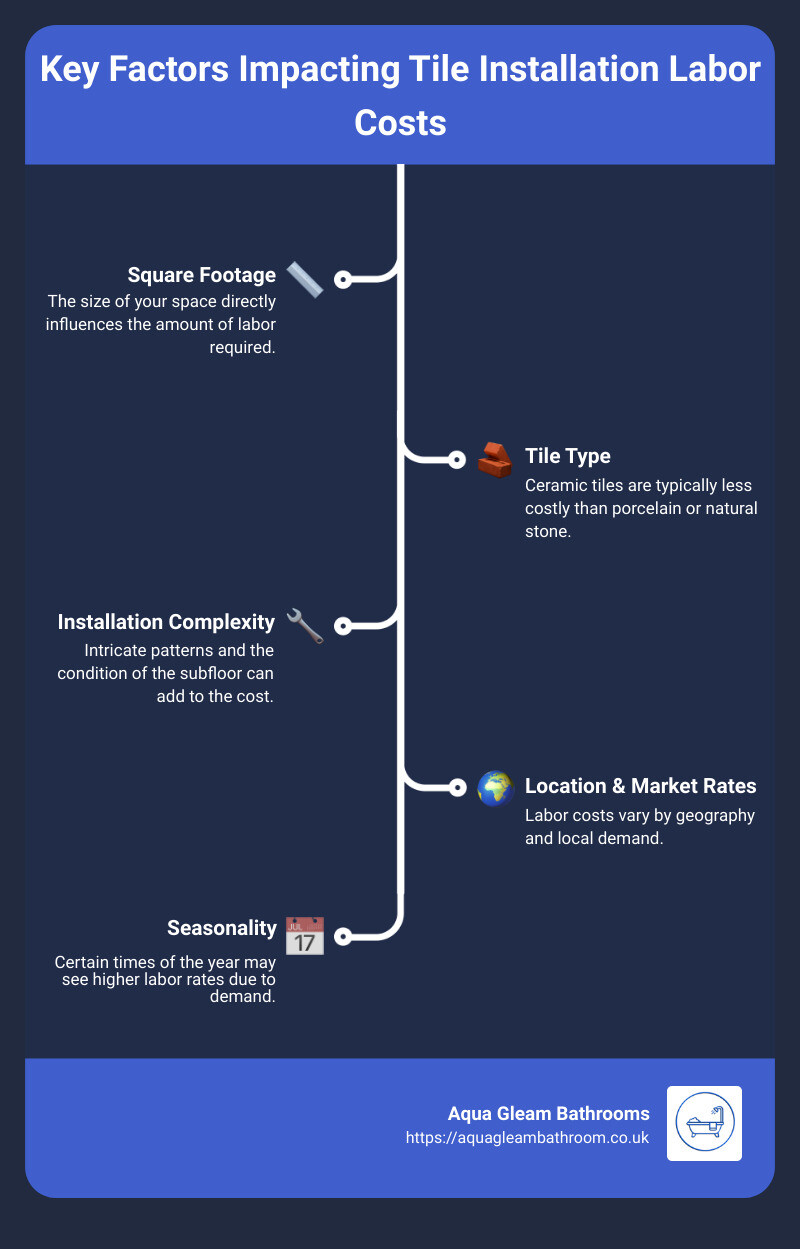
When planning a tile installation project, understanding the factors that influence labor costs is crucial. These factors can significantly impact the overall price and should be considered when using a tile installation labor cost calculator.
Tile Size and Type
The type of tile you choose plays a significant role in the cost of labor. Here’s how different types compare:
- Ceramic: Generally easier and less expensive to install due to its uniform size and shape.
- Porcelain: While similar to ceramic, porcelain can be tougher to cut and install, potentially increasing labor costs.
- Natural Stone: Tiles like marble or travertine require special handling and cutting techniques, leading to higher installation costs.
Installation Complexity
The complexity of your installation will also affect labor costs. Consider these aspects:
- Patterns: Intricate tile patterns, such as herringbone or basket weave, require more time and precision, increasing labor costs.
- Subfloor Condition: A subfloor that needs extensive preparation or repair can add to the complexity and cost of the project.
- Custom Cuts: Tiles that need to be cut to fit around fixtures or corners add time and labor to the project.
Location and Market Rates
Finally, where your project is located can have a significant impact on labor costs due to:
- Geographical Location: Labor rates vary widely by region, with urban areas typically having higher rates than rural areas.
- Demand: High demand for tile installers in your area can drive up labor costs.
- Seasonality: Certain times of the year may be busier for installers, potentially affecting prices.
By considering these factors – tile size and type, installation complexity, and local market rates – you can get a more accurate estimate using a tile installation labor cost calculator. This understanding helps ensure that there are no surprises when budgeting for your tile installation project.
In the next section, we’ll explore how to use a tile installation labor cost calculator effectively, to get a clearer picture of your project’s potential costs.
How to Use a Tile Installation Labor Cost Calculator
When planning for tile installation, using a tile installation labor cost calculator is a smart step to ensure you’re budgeting accurately. Let’s break down how to use this tool effectively.
Input Details
First, gather all the details about your project. You’ll need to know the square footage of the area where you want the tiles installed. Also, have information on the type of tiles you’re planning to use, such as ceramic, porcelain, or natural stone. The more accurate your input, the more reliable the cost estimate will be.
Adjust for Specifics
Next, consider any specifics of your project that could affect labor costs. This includes the complexity of the tile pattern you desire, the condition of the subfloor, and whether any custom cuts are required. Adjustments for these specifics can significantly impact the final labor cost.
Review Estimates
After inputting your details and adjusting for specifics, review the estimates provided by the calculator. That these are estimates and can vary based on local labor rates and unforeseen project complexities.
For a detailed guide on selecting tiles that align with your design vision and budget, consider exploring resources like Some Things To Consider When Buying Bathroom Tiles. Such resources can offer additional insights into the costs and considerations involved in tile selection, further aiding in your project planning.
By following these steps, you can use a tile installation labor cost calculator to get a clearer idea of what your tile installation project might cost. This tool is invaluable for planning your budget and ensuring that you are prepared for the financial aspect of your project. With a detailed estimate in hand, you’re one step closer to transforming your space with beautiful new tiles.
Calculating Your Project with Aqua Gleam Bathrooms
When it comes to bringing your tile installation project to life, understanding the financial aspect is just the beginning. At Aqua Gleam Bathrooms, we take a holistic approach to ensure not only that your project fits within your budget but also exceeds your expectations in terms of quality and precision. Here’s how we do it:
Project Scope
First, we dive deep into the scope of your project. This means looking beyond just the square footage to consider the specific requirements of your space. Whether it’s a kitchen backsplash or a full bathroom remodel, we tailor our approach to meet your needs. Our attention to the unique aspects of your project allows us to provide a more accurate and personalized estimate.
Quality Assurance
Quality is at the heart of everything we do. Our team of professionals is committed to delivering the highest standard of workmanship. From the initial selection of materials to the final installation touches, we ensure every aspect of your project is handled with care. This commitment to quality not only assures a stunning finish but also maximizes the durability and value of your investment.
Attention to Detail
As highlighted in our expert tips, attention to detail is what sets a professional installation apart. This encompasses everything from precise measurements and cuts to the strategic alignment of tiles for aesthetic appeal and functionality. Our meticulous approach ensures that every detail, no matter how small, is accounted for. This not only enhances the beauty of the finished project but also contributes to its longevity and ease of maintenance.
By combining a clear understanding of your project scope with our unwavering commitment to quality and detail, Aqua Gleam Bathrooms delivers results that are both beautiful and built to last. Our process ensures that there are no surprises when it comes to cost, and you are left with a space that you love.
Next, let’s explore some tips for reducing tile installation costs without compromising on quality.
Tips for Reducing Tile Installation Costs
Reducing the cost of tile installation doesn’t mean you have to compromise on the final look or quality of your project. With a bit of planning and smart choices, you can save money while still achieving a stunning result. Here are some practical tips:
DIY Preparation
You don’t need to be a professional to handle some parts of the preparation work. By doing some tasks yourself, you can significantly reduce the labor costs. This includes:
- Removing old tiles: Carefully taking out the existing tiles and preparing the surface for new ones.
- Cleaning the surface: Ensuring the area is clean, smooth, and ready for the new tiles to be installed.
Bulk Purchasing
Materials can be one of the biggest costs in a tiling project. By purchasing your tiles in bulk, you can often get them at a discounted rate. Consider:
- Buying extra: Always buy a bit more than you think you’ll need to account for cuts and breakage. Purchasing more at once can sometimes push you into a bulk price bracket.
- Looking for sales: Keep an eye out for sales at tile stores or discounts on discontinued lines.
Flexible Scheduling
Labor costs can vary depending on the time of year and the installer’s schedule. If you’re able to be flexible, you might be able to negotiate a better rate. Think about:
- Off-peak discounts: Some installers offer discounted rates during slower times of the year.
- Being schedule-flexible: If you’re not in a rush, let your installer know. They might offer a discount for the convenience of fitting your job into their schedule gaps.
By implementing these strategies, you can help manage the costs associated with tile installation. The goal is to reduce expenses without cutting corners on quality. For more insights on achieving the best results for your tiling project, considering the balance between cost and quality, check out Some Things To Consider When Buying Bathroom Tiles.
Next, we’ll dive into some frequently asked questions about tile installation, including costs, complexities, and how to avoid unexpected charges.
Frequently Asked Questions about Tile Installation
What’s the average cost per square foot for tile installation?
The average cost per square foot for tile installation can vary widely, depending on several factors such as the type of tile you choose and the complexity of the installation. Generally, you can expect to pay anywhere from $5 to $15 per square foot. Ceramic tiles might be on the lower end of this range, while porcelain and natural stone tiles can be more expensive.
How much can complexity add to the cost?
Complexity can significantly impact the cost of tile installation. Intricate patterns, the need for custom cuts, or a challenging subfloor condition can increase labor time and costs. For designs that require detailed work, costs could go up by 20% to 50% compared to a straightforward installation. It’s important to discuss the details of your design with your installer to understand how complexity might affect your final bill.
Are there any hidden costs I should be aware of?
Yes, there can be hidden costs in tile installation projects. These might include:
- Preparation work: If your subfloor needs repair or leveling before installation, this will add to the cost.
- Removal of old flooring: If the installers need to remove existing flooring, it could increase the project’s price.
- Sealing tiles: Some tiles, especially natural stone ones, need to be sealed, which can add to the overall cost.
- Unexpected complications: Issues like moisture damage or mold found during the installation process can lead to additional charges.
To avoid surprises, get a detailed estimate from your contractor that covers all potential aspects of the job. Utilizing a tile installation labor cost calculator can also help you get a better idea of what to expect in terms of expenses. Thorough planning and clear communication with your installer can help minimize unexpected costs.
Next, we’ll conclude our guide with a recap and highlight the importance of choosing a professional service like Aqua Gleam Bathrooms for your tile installation project.
Conclusion
We’ve walked through the essentials of calculating tile installation labor costs, emphasizing how factors like tile size, type, installation complexity, and location can impact the overall price. Understanding these elements and using a tile installation labor cost calculator can help streamline your project planning process, ensuring you approach your renovation with clear, realistic budget expectations.
The importance of opting for a professional service can’t be overstated. While it might be tempting to cut corners to save on upfront costs, the value of expertise, quality assurance, and attention to detail that companies like Aqua Gleam Bathrooms offer can significantly outweigh initial savings. Professional installers not only bring years of experience but also a commitment to excellence that ensures your tile installation stands the test of time, both in durability and aesthetics.
Choosing Aqua Gleam Bathrooms means opting for a partner who understands the intricate dance of precision and artistry involved in tile installation. Our dedication to detail, from the initial consultation to the final touch-up, ensures that your vision is brought to life just as you imagined. Moreover, our expertise isn’t just about installing tiles; it’s about crafting spaces that reflect your unique style while maximizing functionality and value.
In summary, while understanding labor costs is crucial, selecting a professional installer like Aqua Gleam Bathrooms is paramount. We not only help you navigate the complexities of tile installation but also ensure a seamless, satisfying renovation experience that enhances your home’s beauty and value. Your home deserves nothing less than the perfection that comes from skilled craftsmanship and unwavering attention to detail.