

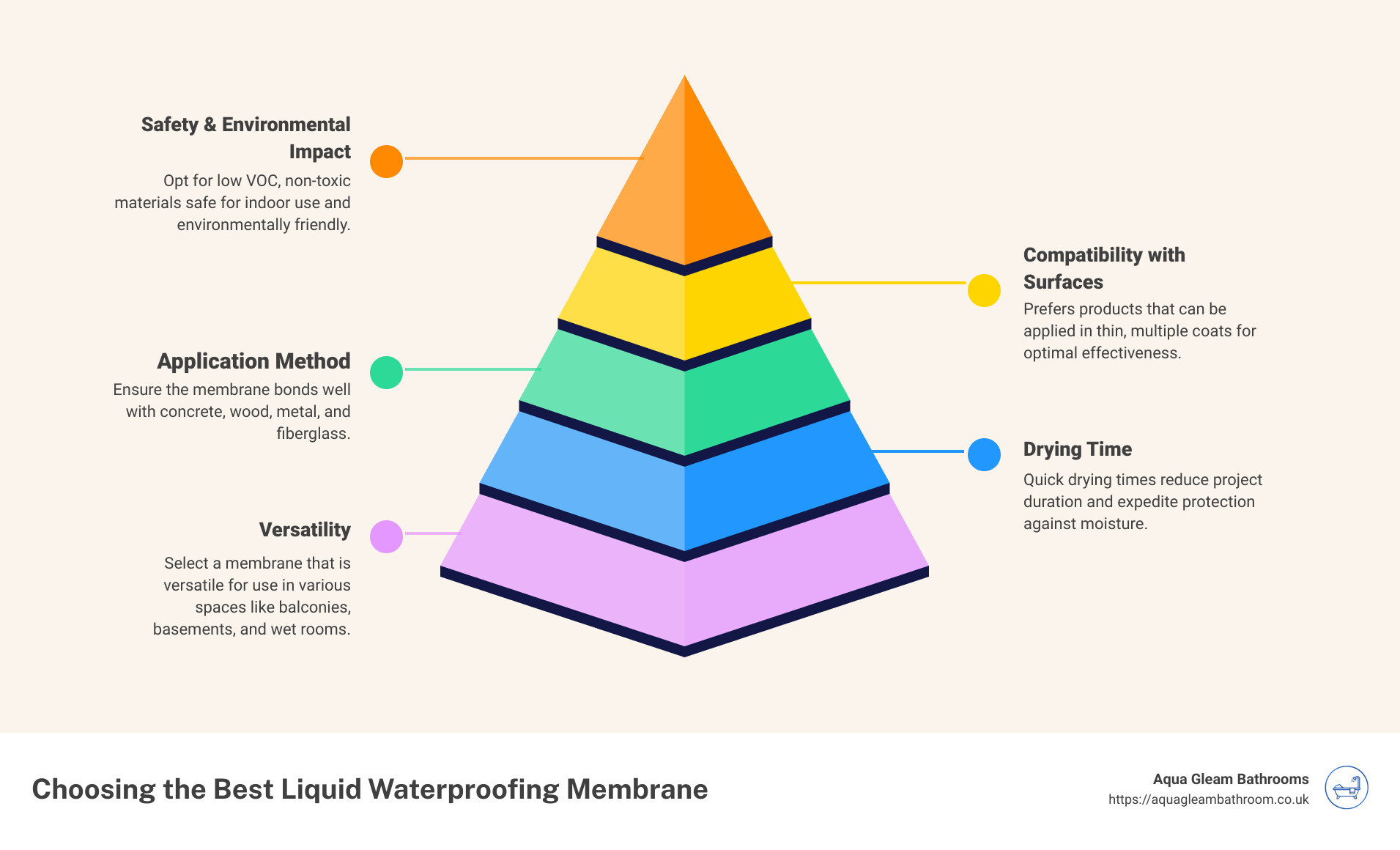
When exploring liquid membranes for waterproofing, it’s crucial to pick a product that provides robust, long-lasting protection for spaces susceptible to moisture. If you’re short on time, here’s what you need to know:
- Liquid membranes are versatile coatings applied to various surfaces for moisture intrusion prevention.
- Ideal for balconies, decks, basements, and more.
- Must be applied in thin, multiple coats for effectiveness.
- Compatible with substrates like concrete, wood, metal, and fiberglass.
- Look for products safe for indoor use, low VOC, and with quick drying times.
Waterproofing is not just about keeping water out; it’s about safeguarding the structural integrity of your home and ensuring a healthy environment free from damp and mold. The right liquid membrane acts as a protective shield, offering both flexibility and a seamless barrier against the relentless assault of moisture.
Whether it’s a leaking balcony or a damp basement, a high-quality liquid membrane can solve these issues, making your home a safer, more comfortable place. Given the diverse range of available products, understanding their application, benefits, and compatibility with different surfaces is the first step in transforming vulnerable areas into watertight spaces.
Understanding Liquid Membranes
When you’re looking to protect your home from water damage, liquid membranes offer a versatile and effective solution. Let’s dive into the types, uses, and application surfaces of these waterproofing champions.
Types of Liquid Membranes
Liquid membranes come in various formulations, each designed to meet specific needs. Some common types include:
- Polyurethane Liquid Membranes: Known for their flexibility and strength, ideal for areas subject to movement.
- Cementitious Membranes: A blend of cement and polymer, perfect for wet areas like bathrooms and kitchens.
- Bituminous Membranes: Made from bitumen, these are great for roofs and underground waterproofing.
Uses of Liquid Membranes
The beauty of liquid membranes lies in their wide range of applications. They can be used to:
- Waterproof balconies, decks, and patios, preventing water seepage and damage.
- Seal basements, both on the floors and walls, to keep moisture out.
- Protect pools and ponds, ensuring they remain leak-free.
- Create water-resistant barriers on roofs, safeguarding your home from rain and snow.
Application Surfaces
One of the standout features of liquid membranes is their compatibility with almost any surface. They can be applied to:
- Concrete: Forms a solid, durable bond with concrete surfaces.
- Wood: Seals and protects wood from moisture without compromising its integrity.
- Metal: Prevents rust and corrosion on metal surfaces.
- Tile and Stone: Ensures water doesn’t seep through tile grout or stone cracks.
- Fiberglass and Roofs: Offers a flexible, waterproof coat that withstands weather elements.
Important Tips:
- Thin, Multiple Coats: Always apply in thin, multiple coats to avoid tackiness and ensure thorough drying.
- Surface Preparation: Clean and dry the surface before application for optimal adhesion.
- Compatibility Check: Although liquid membranes are versatile, always check their compatibility with your specific surface.
Liquid membranes are a powerful tool in your waterproofing arsenal. Whether you’re dealing with a leaky balcony or a damp basement, there’s a liquid membrane solution that can provide long-lasting protection. By understanding the types, uses, and application surfaces, you’re well on your way to selecting the right product for your project. A well-applied liquid membrane not only prevents water damage but also saves you from costly repairs down the line.
In the next section, we’ll explore the benefits of liquid waterproofing membranes, highlighting why they’re a smart choice for homeowners and contractors alike.
Benefits of Liquid Waterproofing Membranes
When it comes to protecting your home or building from water damage, liquid waterproofing membranes stand out for their unique advantages. Let’s dive into the key benefits: flexibility, seamless bonding, and longevity.
Flexibility
One of the standout features of liquid membranes is their incredible flexibility. These coatings can stretch up to 300% without tearing, making them perfect for surfaces that move or crack over time. Imagine covering your roof, balcony, or pool with a rubber-like skin that can expand and contract with the weather. This flexibility means that small cracks that develop over time get bridged, not exposed.
Seamless Bonding
Liquid membranes form a seamless, fully adhered layer over surfaces. Unlike traditional waterproofing methods that rely on multiple pieces and can leave seams or edges vulnerable, liquid membranes cover every nook and cranny in one continuous layer. This seamless application is especially critical in areas prone to water pooling or where intricate details and penetrations (like pipes or vents) exist. It’s like wrapping your surface in a custom-fitted, water-resistant glove.
Longevity
Thanks to their durable nature, liquid waterproofing membranes offer long-lasting protection against moisture intrusion. They’re UV stable, which means they can withstand harsh sunlight without degrading, and they’re resistant to a variety of chemicals and environmental conditions. Some systems, when combined with topcoats like ArmorShield Polyurethane, can even withstand vehicle traffic, making them ideal for driveways and garages. With proper application, these membranes can protect your surfaces for years, saving you money and hassle in the long run.
The benefits of using a liquid waterproofing membrane are clear. Their flexibility allows them to adapt to changing conditions and bridge cracks, their seamless nature provides comprehensive coverage, and their durability ensures they stand the test of time. Whether you’re looking to waterproof a balcony, a kitchen, or even a bathroom, liquid membranes offer a reliable and effective solution.
We’ll delve into how to choose the right liquid membrane for your specific needs, considering factors like surface compatibility and environmental conditions.
How to Choose the Right Liquid Membrane
Choosing the right liquid membrane for your waterproofing project is crucial. Not every liquid membrane will suit every surface or withstand every environmental condition. Here’s how to make the best choice:
Factors to Consider
When selecting a liquid membrane, consider the following key factors:
-
Durability: Look for a membrane that offers long-lasting protection. The SEMCO Liquid Membrane™, for example, is known for its excellent bridging and waterproofing capabilities, making it a durable option for various applications.
-
Flexibility: A good liquid membrane should stretch without tearing. This is important for covering small cracks and dealing with building movement.
-
Ease of Application: Choose a product that is easy to apply. Some membranes can be applied with a brush, roller, or even sprayed on, offering versatility depending on your project needs.
Surface Compatibility
Different surfaces require different preparation and products:
-
Concrete or Gunnite: Requires cleaning with specific cleaners like Nu-Lift Cleaner and Stone Soap to remove any mineral deposits before applying a suitable membrane like SEMCO Liquid Membrane™.
-
Fiberglass Surfaces: These need to be sanded first to ensure the membrane adheres properly. After sanding, a different preparation, such as Preparation B, might be necessary.
-
Damp Surfaces: If the substrate is constantly damp, a product like Natural Shield should be used first to mitigate the moisture before applying the waterproofing membrane.
Environmental Conditions
The environment plays a significant role in the choice and application of a liquid membrane:
-
Temperature and Humidity: Some products, like the SEMCO Liquid Membrane™, have specific curing times that can vary with temperature and humidity. Ensure the conditions are right for the product you choose.
-
UV Exposure: If the membrane will be exposed to sunlight, ensure it is UV stable. Armor Liquid Membrane, for instance, is fully UV stable, making it suitable for outdoor applications.
-
Water Exposure: For areas that will be submerged or in constant contact with water, such as pools, choose a membrane designed for such conditions. The product description should clearly state if it’s suitable for submerged applications.
In Conclusion
Choosing the right liquid membrane involves understanding the specific needs of your project, from the type of surface you’re working on to the environmental conditions it will face. By considering these factors carefully, you can select a membrane that offers the best protection and longevity for your waterproofing project. The goal is not just to waterproof but to do so in a way that ensures durability, ease of maintenance, and compatibility with your specific application.
We’ll explore the top applications for liquid waterproofing membranes, showcasing where and how they can be used to protect various surfaces against water and moisture intrusion.
Top Applications for Liquid Waterproofing Membranes
Liquid waterproofing membranes are like superheroes for buildings. They protect against water and moisture, which can be damaging over time. Let’s dive into where these liquid membranes shine the most.
Roofing
Roofs face the brunt of weather conditions. From scorching sun to pouring rain, they need strong protection. Liquid membrane is perfect here because it creates a seamless barrier. No seams mean no weak spots for water to sneak through. Plus, it can stretch, handling the roof’s expansion and contraction with temperature changes.
Balconies
Balconies are great until they start leaking. Since they’re exposed to the elements, they need solid waterproofing. The liquid membrane works wonders by forming a flexible, yet tough, layer over the balcony surface. This means water rolls right off, keeping everything underneath dry.
Kitchens
Kitchens face spills and splashes daily. A liquid membrane can protect the floors and walls from moisture damage. It’s like a shield, keeping the surfaces safe from the mishaps of cooking and cleaning. Plus, it’s easy to clean, making it perfect for a kitchen’s hustle and bustle.
Bathrooms
Bathrooms and water go hand in hand. This makes them prime spots for liquid membrane application. It can be used on floors, walls, and even around the shower area to prevent leaks and moisture penetration. Since it’s mold-resistant, it keeps the bathroom healthier and cleaner.
Pools
Pools are all about water, but you don’t want that water seeping into places it shouldn’t. Liquid membrane comes to the rescue by creating a watertight seal around the pool. It’s safe for both the pool’s occupants and the environment. Plus, it’s durable enough to handle the pool chemicals.
In conclusion, whether it’s keeping a roof dry, protecting a balcony from rain, making a kitchen spill-proof, ensuring a bathroom is leak-free, or sealing a pool, liquid waterproofing membranes are versatile and effective. They not only prevent water intrusion but also extend the life of these surfaces, making them a smart choice for any project.
Moving on, let’s tackle some of the most frequently asked questions about liquid membranes to clear up any uncertainties you might have.
Frequently Asked Questions about Liquid Membranes
What is Liquid Membrane Used For?
Liquid membrane is a versatile waterproofing solution used in various applications to protect surfaces from water and moisture intrusion. Here are some common uses:
- Roofing: It creates a seamless, water-resistant layer over roofs, protecting buildings from leaks and water damage.
- Balconies: Applied to balconies, it prevents water seepage, protecting the structure below.
- Wetrooms: In bathrooms and wetrooms, it provides a moisture barrier, preventing mold and water damage.
What is the Best Liquid Membrane for Waterproofing?
Choosing the best liquid membrane depends on several criteria:
- Performance: Look for products that offer high elasticity and can bridge small cracks, like Armor Liquid Membrane, which stretches up to 300% without tearing.
- Durability: A good liquid membrane should be UV stable and capable of withstanding harsh weather conditions.
- Compatibility: Ensure the membrane is compatible with the surface you’re applying it to, whether it’s concrete, wood, metal, or another material.
Is Liquid Waterproofing Membrane Good?
Yes, liquid waterproofing membrane offers several advantages that make it a suitable choice for many projects:
- Properties: It forms a seamless, fully adhered, elastomeric barrier that is monolithic and highly effective against water and moisture.
- Advantages: The flexibility to conform to intricate shapes and details, easy application (brush, roller, or spray), and the ability to bridge cracks make it a highly effective waterproofing solution.
- Suitability: It’s suitable for a wide range of applications, from roofing and balconies to wetrooms. Plus, it’s safe for use in sensitive areas like fish ponds and potable water storage.
In conclusion, liquid membranes are an excellent choice for waterproofing various surfaces. They offer flexibility, durability, and a seamless barrier against water and moisture, making them suitable for a wide range of applications. When selecting a liquid membrane, consider the specific needs of your project, including the surface type, environmental conditions, and desired performance characteristics. With the right product, you can achieve long-lasting protection and peace of mind.
Conclusion
Choosing the right waterproofing solution is crucial for any construction or renovation project, and liquid membranes offer a flexible and durable option for protecting various surfaces from water and moisture damage. At Aqua Gleam Bathrooms, we understand the importance of using high-quality materials and employing meticulous workmanship in every project we undertake.
Quality Workmanship
Our team of professionals is skilled in applying liquid membrane waterproofing to ensure a seamless and effective barrier against water intrusion. We take pride in our ability to deliver exceptional results that not only meet but exceed our clients’ expectations. Our attention to detail ensures that every corner, joint, and surface is properly covered, leaving no room for leaks or moisture penetration.
Attention to Detail
The success of waterproofing applications, especially in areas like bathrooms and kitchens, heavily relies on the precision and care taken during the application process. At Aqua Gleam Bathrooms, our experts meticulously prepare and apply liquid membranes, ensuring complete coverage and optimal thickness. We understand that the effectiveness of a liquid membrane is in its application, which is why we go above and beyond to ensure perfection in every step.
Our commitment to quality and excellence is evident in the positive feedback we receive from our satisfied customers. We believe that our high-quality craftsmanship, combined with our keen eye for detail, sets us apart from the competition.
Whether you’re renovating a bathroom, kitchen, or any other space that requires waterproofing, you can trust Aqua Gleam Bathrooms to provide solutions that are not just effective but also aesthetically pleasing. Our use of top-tier liquid membranes, combined with our expert application techniques, guarantees a waterproof solution that lasts.
For more information on our services and how we can help with your waterproofing needs, visit Aqua Gleam Bathrooms. Let us help you achieve the peace of mind that comes with knowing your space is protected against water damage, thanks to the superior quality of liquid membranes and our unmatched workmanship.