
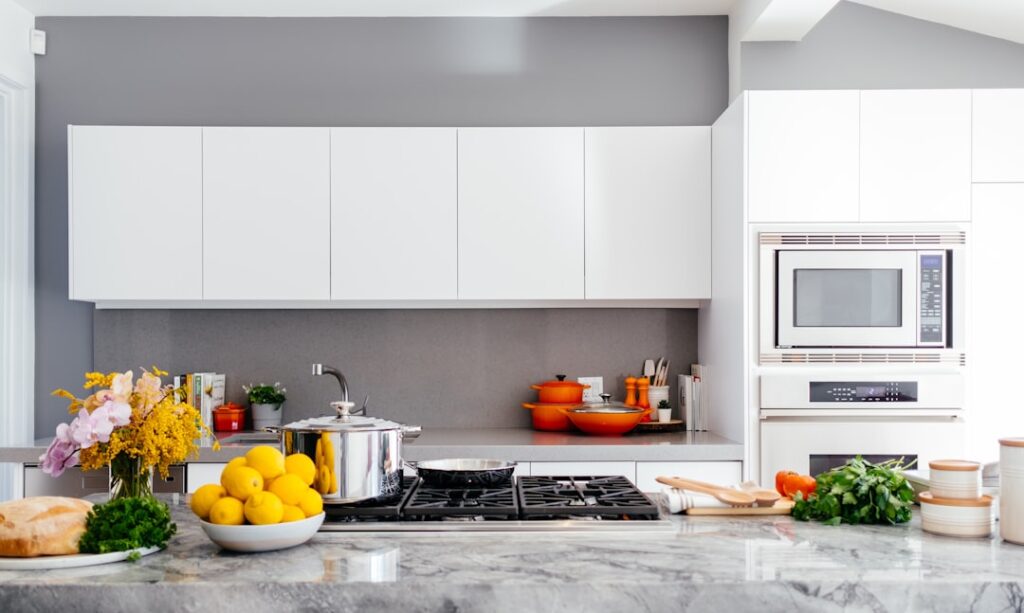
Hidden kitchen outlets can transform your kitchen space, making it both functional and beautiful. If you’re redesigning your kitchen, here are a few quick ways to hide outlets:
- Color-coordinate outlets with walls or backsplashes.
- Opt for paintable covers or custom designs.
- Use strategic placement like under cabinets or within kitchen islands.
- Install pop-up outlets for a seamless look.
Planning a kitchen renovation? Don’t forget to balance aesthetics with functionality while ensuring you follow electrical code compliance. Outlets are essential for convenience, but unsightly outlets can disrupt your kitchen’s design flow. The good news is there are plenty of clever ways to hide them.
First, think about the color and camouflage your outlets to blend with your kitchen’s decor. Next, strategic placement—like hiding outlets under cabinets or on side walls—can keep them accessible but out of sight. Finally, consider innovative solutions like pop-up outlets or specialty flush-mount systems.
Always check your local electrical codes or consult with an electrician to ensure safety and compliance in your renovation project.
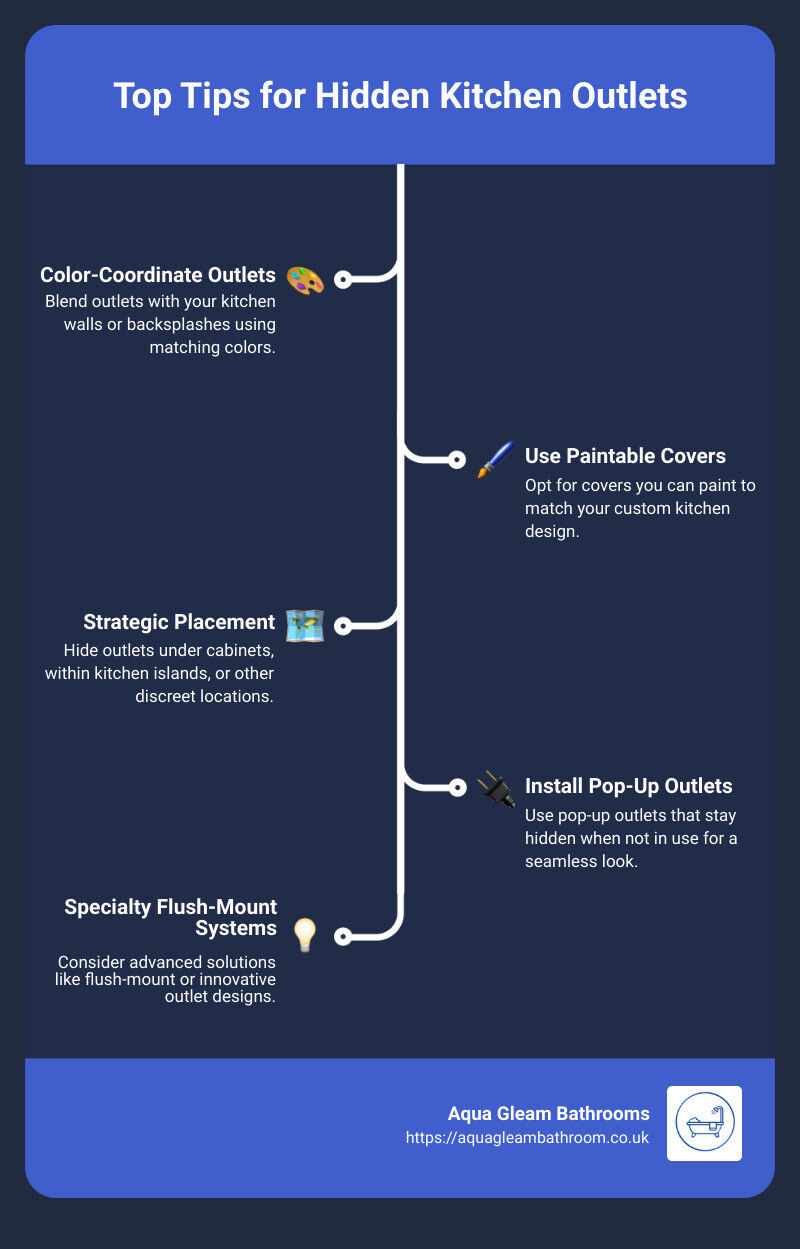
Hidden kitchen outlets terminology:
Camouflage Techniques
Color-Coordinated Outlet Covers
One of the simplest ways to hide your kitchen outlets is by using color-coordinated outlet covers. These covers can blend seamlessly with your backsplash or walls, making them less noticeable.
Lutron and Legrand offer a variety of outlet covers in colors like white, almond, and black. You can also find options in metallic and stone textures to match your kitchen’s aesthetic.
Pro Tip: For a sleek look, choose outlet covers that match the color of your backsplash. This small change can make a big difference in the overall appearance of your kitchen.
Paintable Outlet Covers
If you can’t find a color match, consider using paintable outlet covers. These can be customized to perfectly match your backsplash. Simply take a sample of your tile or paint to a hardware store for color-matching.
High-performance paints like Benjamin Moore Aura are ideal for this job. They stand up to frequent washing and come in various sheens. A high gloss sheen is particularly effective as it makes cleaning easier.
Pros:
- Easy and affordable
- Customizable to any color
Cons:
- Requires routine repainting
- High gloss paint can stand out against a matte background
To ensure durability, use a high-performance paint and apply a high gloss sheen. This will make cleaning off cooking oils easier and extend the life of your paint job.
Backpainted-Glass Outlet Covers
For a modern and high-end look, consider backpainted-glass outlet covers. These are especially effective if you have a glass tile backsplash. The concept is simple: paint the backside of a glass cover to match your backsplash, and install it with the unpainted side facing out. This method leaves a smooth glass finish that is easy to clean.
Arnev is a popular brand for these covers, and you can find some inspiring examples in their customer gallery.

DIY Tip: If you’re handy, you can even paint realistic grout lines on the back of the glass cover. Kristin Jackson of Hunted Interiors has a great tutorial on how to do this. This technique can make the outlet cover blend seamlessly into your tile pattern.
Pros:
- Easy to clean
- High-end look
Cons:
- More expensive than plastic covers
- Requires precise painting skills
By choosing the right camouflage technique, you can make your kitchen outlets nearly invisible, maintaining both functionality and aesthetics.
Next, we’ll explore innovative placement options to further hide those unsightly outlets.
Innovative Outlet Placement
On the Backsplash Wall
One way to hide outlets is to integrate them directly into the backsplash. If your backsplash features a strong horizontal tile pattern or horizontal veining in a stone slab, consider orienting your outlets horizontally. This helps them blend in with the natural lines and reduces their visual impact.
Pros:
- Seamless integration with tile pattern
- Reduced visual presence
Cons:
- More complex installation
- Replacement can be costly if outlets fail
Underneath Upper Cabinets
Another clever way to hide outlets is to mount them under upper cabinets. According to electrical code, outlets should not be higher than 20 inches above countertops, which works well with most cabinet heights.
Options:
- Leave it Visible: Accept that the system will peek out slightly.
- Decorative Light Rails: Hide the system with decorative light rails, though this may not suit sleek, modern cabinets.
Pros:
- Keeps outlets hidden but accessible
- Customizable with various components
Cons:
- Can be visible depending on cabinet height
- Decorative rails may not fit all cabinet styles
Under the Countertops
For a truly hidden solution, consider installing outlets under the countertops. These are known as Pop Up Outlet Towers or Power Sockets. They stay concealed until you press a button, which raises the outlets for use.
Pros:
- Keeps backsplash clean and uninterrupted
- Various color and finish options
Cons:
- Takes up cabinet space below the countertop
- May not comply with all local codes
Pro Tip: Always consult with your electrician and check local codes before installing pop-up outlets to ensure compliance and safety.
Specialty Outlet Solutions
Flush-Mount Systems
Flush-mount systems are a sleek way to hide outlets. These systems sit flush with the wall, creating a seamless look. They are a favorite among high-end designers for their ability to blend perfectly with the surroundings. However, these outlets are pricey and must be installed before drywall goes in.
For a more budget-friendly option, there are alternatives that offer similar flush-mount systems at a lower cost. Another alternative includes self-contained receptacles that come in various colors and include a cap to hide the outlet when not in use. However, they are only available in 15-amp versions, so check your local code requirements.
Pros:
- Seamless integration with the wall
- High-end aesthetic
Cons:
- Expensive
- Requires professional installation before drywall
Pop-Up Outlets
Pop-up outlets are another innovative way to keep your kitchen looking clean. These outlets stay hidden until you need them, then pop up from the countertop or wall with a simple press.
Countertop pop-up outlets are particularly useful in kitchen islands or workstations. Some models even offer wireless charging capabilities and spill-proof designs, making them ideal for kitchen environments.
Pros:
- Keeps outlets hidden when not in use
- Available with modern features like USB ports and wireless charging
Cons:
- Takes up space under the counter
- May not comply with all local codes
Charging Station Drawers
If you want to keep your countertops clutter-free, consider a charging station drawer. These drawers have integrated power outlets, allowing you to charge your devices while keeping them out of sight.
For a more cost-effective solution, recessed furniture power strips can be found for under $20 on Amazon. These are perfect for DIY enthusiasts and can be easily integrated into existing drawers.
Pros:
- Keeps devices hidden while charging
- Frees up counter space
Cons:
- Takes up drawer space
- More expensive options can be pricey
Pro Tip: When setting up a charging station drawer, consider its placement carefully. Ideally, it should be in a spot that’s easily accessible but doesn’t interfere with your cooking routine.
Frequently Asked Questions about Hidden Kitchen Outlets
How can I hide my kitchen receptacles?
Hiding your kitchen receptacles can be done in several clever ways:
1. Camouflage Techniques:
- Color-Coordinated Outlet Covers: Match the outlet covers to your backsplash. This can make them less noticeable. For example, if your backsplash is white, use white outlet covers.
- Paintable Outlet Covers: Use paintable covers that blend with the wall color. Brands like Benjamin Moore offer high-performance paints that can match your wall’s hue perfectly.
- Backpainted-Glass Outlet Covers: These are great for glass tile backsplashes. They can be custom-painted to match the tiles, making the outlets nearly invisible.
2. Innovative Outlet Placement:
- On the Backsplash Wall: Install outlets horizontally and low on the backsplash. This way, they are less obtrusive and can be hidden behind appliances.
- Underneath Upper Cabinets: Use systems like Legrand Adorne to place outlets under cabinets, keeping them out of direct sight.
- Under the Countertops: Pop-up outlets like the ones from Legrand Adorne can be hidden in the countertop and only appear when needed.
3. Specialty Outlet Solutions:
- Flush-Mount Systems: Brands like Trufig and DesignMod offer systems that sit flush with the wall, blending seamlessly.
- Pop-Up Outlets: These stay hidden until you need them. They are great for kitchen islands.
- Charging Station Drawers: Integrated power outlets in drawers keep your devices out of sight while charging.
Where are outlets supposed to be in a kitchen?
According to the National Electrical Code (NEC), outlets in the kitchen must follow specific guidelines:
- Spacing Requirements: Outlets should be placed every 4 feet along the countertop. This ensures that you have easy access to power no matter where you are working.
- GFCI Requirements: Outlets near water sources, like sinks, must be Ground Fault Circuit Interrupter (GFCI) outlets. This is crucial for safety to prevent electrical shocks.
What is the rule for kitchen outlets?
The NEC provides clear rules to ensure safety and functionality in kitchen designs:
- Outlet Per Square Footage: You must have at least one outlet for every 12 linear feet of countertop space. This ensures that you have enough outlets for all your kitchen gadgets.
- GFCI Requirements: Any outlet within 6 feet of a sink must be a GFCI outlet. This is to protect against electrical shock in areas where water is present.
- Dedicated Circuits: Major appliances like refrigerators and microwaves should have dedicated circuits to avoid overloading.
By following these guidelines and using creative solutions, you can keep your kitchen outlets hidden, functional, and compliant with safety standards.
Leading directly into the next section, we will explore various innovative outlet placement ideas to help you maintain a sleek and functional kitchen design.
Conclusion
Planning is the cornerstone of a successful kitchen remodel, especially when it comes to hidden kitchen outlets. Thoughtful planning ensures that your kitchen is both aesthetically pleasing and fully functional. It helps you avoid costly mistakes and last-minute changes, ensuring that the final result matches your vision.
At Aqua Gleam Bathrooms, we pride ourselves on our high-quality workmanship and attention to detail. Whether you’re looking to camouflage your outlets with color-coordinated covers or install innovative pop-up outlets, our team has the expertise to bring your dream kitchen to life.
Our experience in kitchen fitting, tiling, plastering, and plumbing ensures that every aspect of your kitchen remodel is handled with precision and care. We understand that every kitchen is unique, and we take the time to understand your needs and preferences.
By choosing Aqua Gleam Bathrooms, you’re not just getting a service; you’re investing in a team that is dedicated to delivering excellence. From the initial planning stages to the final installation, we are committed to providing you with a kitchen that is both beautiful and functional.
Ready to start planning your dream kitchen? Contact Aqua Gleam Bathrooms today for a free consultation and let us help you create a space that you’ll love for years to come.