
Have you ever found yourself juggling appliances in your kitchen, searching for an outlet while your soup is at a rolling boil? It’s a common scenario as kitchen design often overlooks the critical aspect of electrical outlet placement. This lack of foresight leads to a kitchen that is not just inconvenient but, in some cases, potentially hazardous. At Aqua Gleam Bathrooms, we understand that the secret to a well-functioning kitchen is as much about electrical outlet placement as it is about cabinets, countertops and fixtures.
Strategically placed electrical outlets enhance the kitchen’s functionality and aesthetics, ensuring that every appliance, be it fixed or portable, has easy access to power. Furthermore, it reduces unnecessary clutter and keeps your kitchen safer, since running cords across countertops is a recipe for mishap.
Let’s highlight the critical points to consider when thinking about kitchen electrical outlet placement:
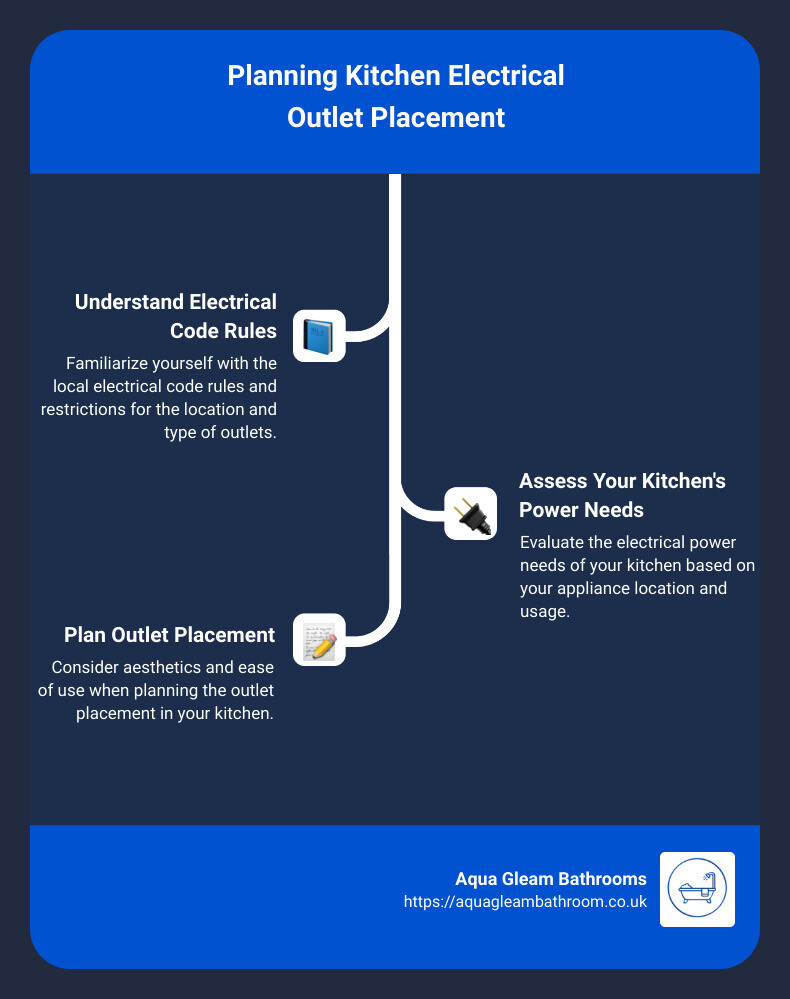
- Understand electrical code rules and restrictions, including the location and type of outlets, ensuring safety and functionality.
- Assess your kitchen’s electrical power needs based on your appliance location and usage.
- Plan outlet placement considering aesthetics and ease of use.
Our aim in the upcoming sections is to delve deeper into these elements, guiding you step by step through the process of planning your kitchen electrical outlet placement. With expert advice at your fingertips, you will be able to unlock all the secrets of perfect kitchen electrical outlet placement for a safer, more functional, and aesthetically pleasing kitchen.
Understanding the Basics: Types of Kitchen Outlets and Electrical Code Rules
When planning your kitchen electrical outlet placement, understand the basic rules and types of outlets. This knowledge ensures safety, functionality, and compliance with the National Electrical Code (NEC).
GFCI Outlets: Protection from Electrocution
A GFCI (ground-fault circuit interrupter) outlet is a special type of receptacle designed to protect you from electrical shocks. It’s especially important in the kitchen, where water and electricity often coexist. These outlets work by quickly cutting off the power when they sense a leakage current or a ground fault, preventing potentially dangerous shocks.
According to the NEC, GFCI outlets are required for all kitchen outlets located above countertop level. This rule is crucial for keeping your kitchen safe, as it offers protection from electrocution and reduces the risk of electrical fires.
Dedicated Circuits for Major Appliances
Another important consideration in kitchen electrical outlet placement is the need for dedicated circuits. Major appliances such as refrigerators, cooktops, and range hoods draw a significant amount of power and must be connected to their own dedicated circuits.
Having a dedicated circuit for each major appliance ensures that it can operate effectively without overloading the electrical system. This not only prevents tripping circuit breakers or blowing fuses but also extends the lifespan of your appliances.
Small but permanent appliances like your garbage disposal also need their own outlets. An outlet under the sink is a smart addition to your kitchen electrical plan.
The 2-4 Rule for Kitchen Outlets
The 2-4 rule is a common guideline in kitchen electrical outlet placement. This rule states that no point on the countertop should be more than 24 inches away from a power outlet, and outlets should not be more than 48 inches apart.
This rule is designed with the cord lengths of modern countertop appliances in mind, which are usually around 18 inches to 2 feet long. Following this rule ensures that you can conveniently use your appliances anywhere on your countertop without resorting to extension cords.
Following these basic rules and understanding the types of outlets required can significantly improve the safety and functionality of your kitchen. At Aqua Gleam Bathrooms, we always adhere to these guidelines when planning kitchen electrical outlet placement to ensure our installations are safe, functional, and aesthetically pleasing.
Planning Your Kitchen’s Power Needs
Now that we’ve covered the basics of electrical outlet placement, let’s dive into the specifics of planning your kitchen’s power needs. This involves considering the location of your fixed appliances, the use of portable appliances, your kitchen’s lighting sources, and the need for charging stations for personal electronics.
Location of Fixed Appliances
Fixed appliances are the big-ticket items like refrigerators, cooktops, and range hoods that won’t be moving around. These appliances require dedicated circuits as per the National Electrical Code. Therefore, it’s crucial to plan for their outlet placement during the initial stages of kitchen remodeling. At Aqua Gleam Bathrooms, we ensure that small but still permanent appliances have outlets installed at their parking spots. For example, we always remember to add an outlet under the sink for the garbage disposal.
Portable Appliances and Their Power Requirements
Your kitchen likely houses several portable appliances like food processors, blenders, and toasters. You need to think about where you’ll use these appliances and place outlets accordingly. If you plan to store most appliances and bring them out for use, ensure the outlets are conveniently located. If some appliances will live on your countertop, place outlets in a way that minimises cord exposure. Most small appliances have relatively short cords (around 18 inches).
Lighting Sources and Their Placement
While freestanding lamps are not common in a kitchen, don’t overlook the importance of lighting and switch placement. You need good light where you work. As Aqua Gleam Bathrooms advises, a combination of ambient lighting for general illumination, task lighting for specific work areas, and accent lighting to highlight design features can dramatically improve your kitchen’s versatility.
Charging Stations for Personal Electronics
It’s common to charge personal electronics like mobile phones and tablets in the kitchen. As we highlighted in our guide on transforming a compact kitchen, a hidden charging station can be a game-changer. A drawer with integrated power outlets allows your devices to stay out of sight while charging, keeping your countertops clutter-free.
In conclusion, planning your kitchen’s power needs involves a deep understanding of your appliances, lighting requirements, and personal habits. At Aqua Gleam Bathrooms, we take all these factors into account to ensure your kitchen is not just beautiful, but also highly functional.
Aesthetic Considerations for Outlet Placement
When it comes to kitchen design, it’s not just about the type of countertop or color of the cabinets. The placement of electrical outlets also plays a significant role in the overall aesthetics of your kitchen. Let’s delve into how you can make your outlets a seamless part of your kitchen design.
Concealing Outlets for a Sleek Look
The idea of having outlets in plain sight may not appeal to everyone, especially if you’re aiming for a minimalist or sleek kitchen design. Thanks to innovative ideas, you can now conceal your outlets for a cleaner look. For instance, outlets can be hidden behind false drawer fronts, especially in kitchen islands, thereby maintaining the overall aesthetics without compromising on functionality.
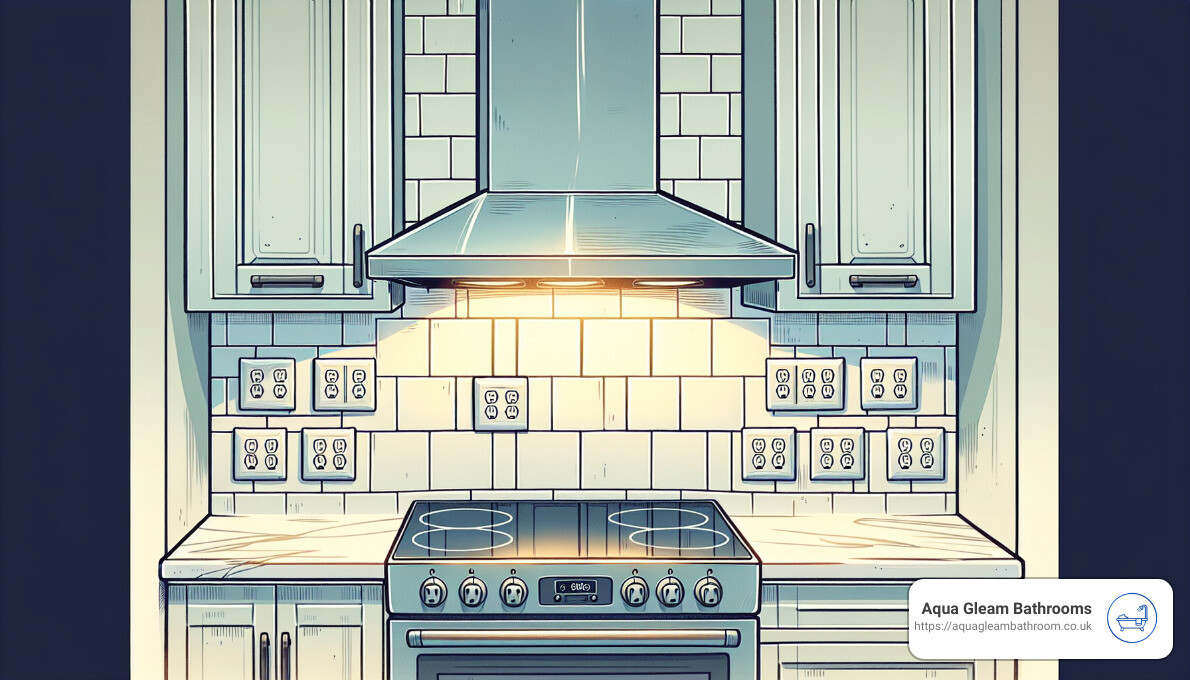
Another idea is installing under-cabinet outlets. When your backsplash is the special feature of your kitchen, under cabinet plugs will keep it looking uniform. However, this might not be the best choice if you plan on keeping appliances like a coffee maker plugged in all the time, as cords will be visible, dangling from above.
Camouflaging Outlets to Blend with Your Kitchen Design
Camouflaging is a simple yet effective way to make your outlets less noticeable. This involves choosing outlet covers and outlets that match the color of your kitchen surfaces. For example, if your kitchen island is black, use black outlet covers and outlets.
There are also paintable covers available in the market that you can paint to match the surface they are on, making the outlets blend in with the background. Companies like Trufig even offer a special flush outlet that can be painted to match the existing background.
Complementing Your Kitchen Design with Outlet Placement
While you must follow certain electrical codes when placing your outlets, there is still room to play around with the exact location to make them part of your kitchen design. For instance, instead of having outlets on your backsplash that could disrupt the design, you could place them on the side wall in a horizontal position. This not only makes them less noticeable but also allows for easy accessibility.
At Aqua Gleam Bathrooms, we understand the importance of balancing functionality and aesthetics in kitchen design. Whether it’s concealing, camouflaging, or creatively placing your outlets, we can help you achieve a kitchen that’s both beautiful and functional.
Innovative Ideas for Outlet Placement
When it comes to kitchen electrical outlet placement, creativity can go a long way in enhancing both the functionality and aesthetics of your kitchen. Here are some innovative ideas that we at Aqua Gleam Bathrooms have successfully implemented in our clients’ homes.
Under-Cabinet Outlets and Plug Mold Strips
Under-cabinet outlets and plug mold strips allow you to hide your outlets while still providing easy access to power. They can be hidden along with under-cabinet lighting to create a functional kitchen that looks sleek. These outlets are not as conveniently visible as standard wall plugs, but they offer an excellent solution for preserving the uninterrupted flow of your backsplash, especially if it features a special design element like marble slabs or a unique tile pattern.
Concealed Outlets in Kitchen Islands
Outlets need not be an eyesore on your kitchen island. By strategically placing the outlets and using creative concealment methods, you can maintain the sleek look of your kitchen island while ensuring easy access to power. For instance, outlets at the island can be concealed behind flip-down doors. This design keeps the outlets out of sight when not in use, preserving the aesthetic appeal of your kitchen island.

Outlets in Cabinets and Countertops
Another innovative idea for kitchen electrical outlet placement is integrating outlets into your cabinets and countertops. For instance, a drawer with integrated power outlets can serve as a hidden charging station for your tech devices, keeping your countertops clutter-free and your devices safe from accidental spills or splatters while cooking. However, it’s crucial to check your local electrical codes or consult with a professional electrician before implementing this idea.

Incorporating these innovative ideas into your kitchen design can significantly improve the functionality and aesthetics of your space. As experts in kitchen remodeling, we at Aqua Gleam Bathrooms can help you implement these ideas while ensuring adherence to safety codes and regulations. Whether you’re considering under-cabinet outlets, concealed outlets in your kitchen island, or integrated outlets in your cabinets and countertops, we’re here to help you unlock the secrets of optimal kitchen electrical outlet placement.
Practical Tips for Outlet Placement
When it comes to perfecting your kitchen electrical outlet placement, it’s not just about compliance with the code. The ultimate goal is to create a space that is both safe and convenient for everyday use. Here are some practical tips to consider when planning your kitchen’s electrical layout.
Considering Accessibility and Convenience
To maximize the usability of your kitchen, think about where you will be using electrical appliances the most. As noted by Remodelista, you should consider the locations of your fixed appliances, the places where you’ll use portable appliances, and even spots where you might need to charge electronic devices. The aim is to minimize cord exposure and keep your countertops clutter-free.
Adhering to the 1 Meter Distance Rule Between Sockets and Sink
Safety should always be a priority in kitchen design. According to a conversation on Smart Electricians, it’s either a recommendation or a regulation to maintain a minimum distance of one meter between electrical sockets and the center of the sink. This is to reduce the risk of water coming into contact with electricity, which can lead to serious safety hazards.
Using Grid Switch Panels for Easy Access
A modern and convenient option is to incorporate grid switch panels into your kitchen design. These allow for easy control of multiple electrical circuits from a single place. As one user on the Smart Electricians site suggested, these are becoming increasingly popular in kitchens. For example, you could have different switches for down lights, pendant lights, unit lights, and room lights, providing versatile control options and allowing you to set different moods in your kitchen.
At Aqua Gleam Bathrooms, we understand that every detail matters in creating your dream kitchen. Incorporating these practical tips into your kitchen electrical outlet placement can enhance both the functionality and safety of your space. Whether you’re starting from scratch or planning a remodel, our team is ready to assist with expert advice and professional installation services.
So, we’ve explored the importance of the kitchen electrical outlet placement, the types of outlets, their strategic placement, and some innovative ideas to incorporate them seamlessly into your kitchen design. Now it’s time to bring it all together.
The key to a successful kitchen design lies in the balance between functionality and aesthetics. A well-designed kitchen is not just about having the most stylish cabinets or the trendiest backsplash – it’s about creating a space that works for you. Your kitchen should be a space where you can cook, eat, entertain, and recharge with ease and comfort. This means having enough power outlets in the right places to support all your kitchen activities, without disrupting the overall design.
Strategic Placement is Key
Consider the activities that take place in your kitchen and plan your outlets accordingly. Do you use a lot of portable appliances? Then make sure you have enough outlets at countertop level. Do you like having music or festive lights in your kitchen? Then consider adding more outlets in less conspicuous places, like under the cabinets or inside a drawer. Always remember that the best time to think about your outlet placement is during the design phase before any work is done.
Functionality Meets Aesthetics
Strategically placing your outlets doesn’t mean you have to sacrifice aesthetics. There are many creative ways to hide or camouflage outlets, making them blend seamlessly with your kitchen design. For instance, outlets can be concealed behind hinged drawer fronts or disguised with decorative covers. As we mentioned earlier, this doesn’t necessarily require additional costs, just a bit of foresight and planning.
At Aqua Gleam Bathrooms, we understand that every detail matters in creating your dream kitchen, even the ones that seem minor, like electrical outlets. We strive to provide solutions that balance both functionality and aesthetics, ensuring that your kitchen is not only beautiful but also efficient and safe.
Undertaking a kitchen remodel or designing a kitchen from scratch can be a complex process with many details to consider. However, with the right planning and expert guidance, you can create a kitchen that truly serves your needs and reflects your personal style.
For more information on how to optimize your kitchen design, check out our post on How to Transform Your Compact Kitchen into a Stylish Haven. If you’re looking for professional assistance, don’t hesitate to contact our team of expert kitchen fitters. We’re here to guide you through every step of the process and ensure that every aspect of your kitchen remodel is done to perfection.
A well-planned kitchen electrical outlet placement can truly enhance the functionality and aesthetics of your kitchen, making cooking and entertaining a joy. So, start planning today and unlock the full potential of your kitchen!